USA
USA
 Canada

Tattoo Ink - Tattoo Ink
Filters
Products:


What Sets Professional Tattoo Ink Apart?
What separates professional tattoo ink from craft or grey-market pigment isn't a slogan on the label, it's consistency you can rely on session after session, and a paper trail behind the label. Professional ink is formulated to hold a stable pigment-to-carrier ratio and a controlled particle size, so it flows through the needle and saturates the same way on the first bottle and the fiftieth. That consistency carries through to the healed tattoo: uniform particle sizing seats evenly in the dermis, holds saturation, and extends how long the colour holds before a touch-up is needed. An ink that drifts in consistency forces you to keep re-reading your machine instead of the tattoo.
The other half is regulatory, and it's worth being precise about. Any ink legally sold in Canada has to be notified to Health Canada, and the manufacturer is responsible for keeping it within Health Canada's limits, including the ISO 17516 microbial benchmark (no E. coli, Pseudomonas, Staph or Candida; total aerobic under 100 CFU/g) that Health Canada tests against in its market surveillance. A real, documented bar, enforced after products reach the market, not a per-bottle certificate. What it is not is "sterile in the bottle": sterility is a regulated term that reputable manufacturers don't claim for tattoo ink, and the meaningful assurance is notification plus the manufacturer's own documented quality control, not a word on the cap.
Professional brands back this with published Safety Data Sheets and, in the better cases, full ingredient disclosure, so you can check what's actually in a colour before you run it on a reactive client. That combination, consistent formulation, documented compliance, ingredient transparency, is what "professional-grade" actually means.
Which Tattoo Ink Brands Does Eikon Carry?
Eikon stocks seven professional ink brands, and only these seven. Each one is here because artists in the studios we supply asked for it, ran it, and kept reaching for it, not because of a distribution agreement. The comparison below is built on that: how these inks actually perform for working artists, not how each brand presents itself.
-
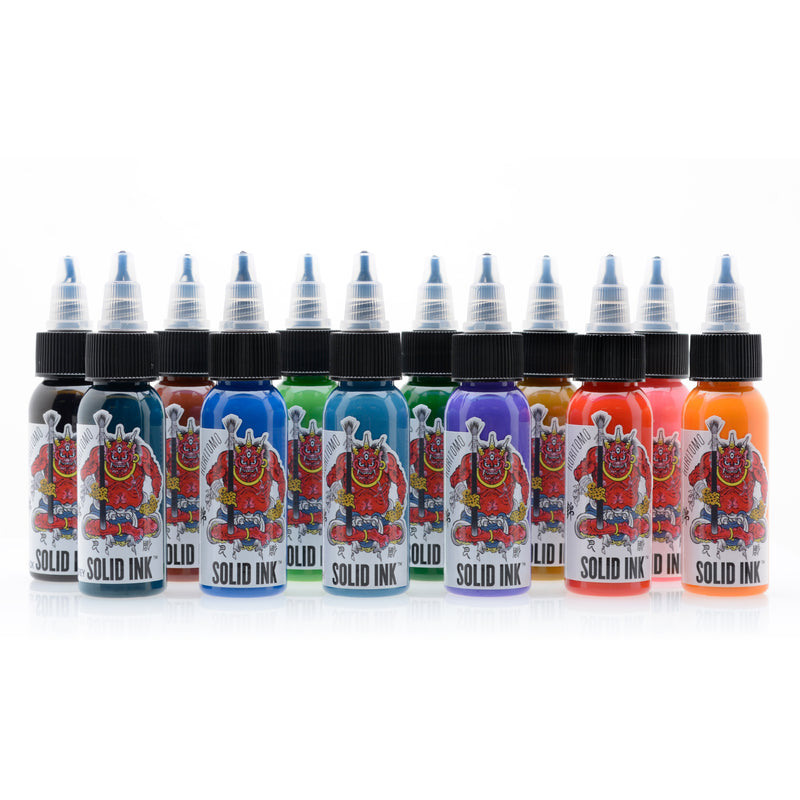
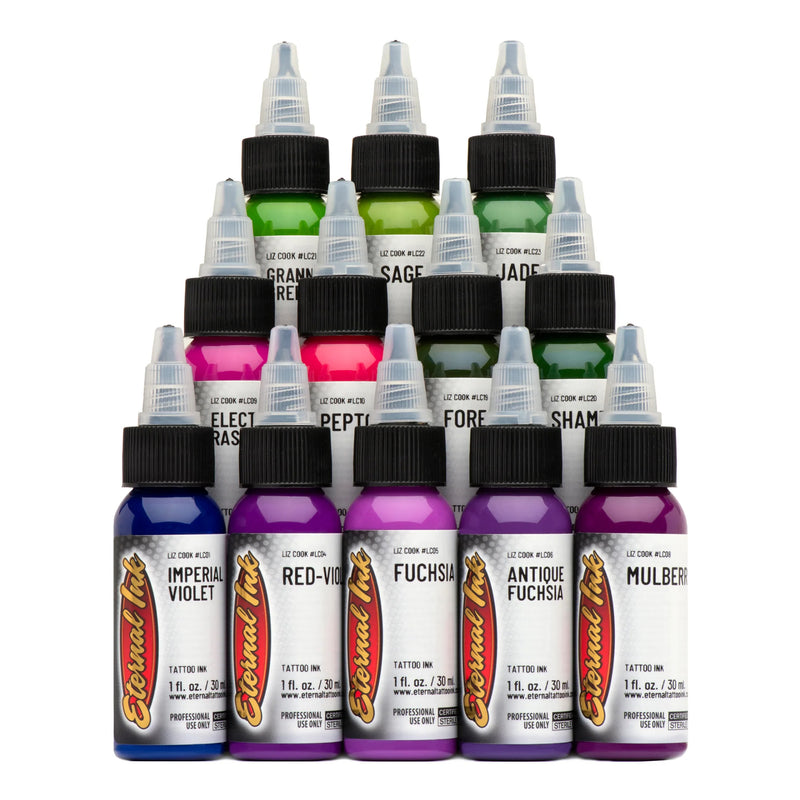
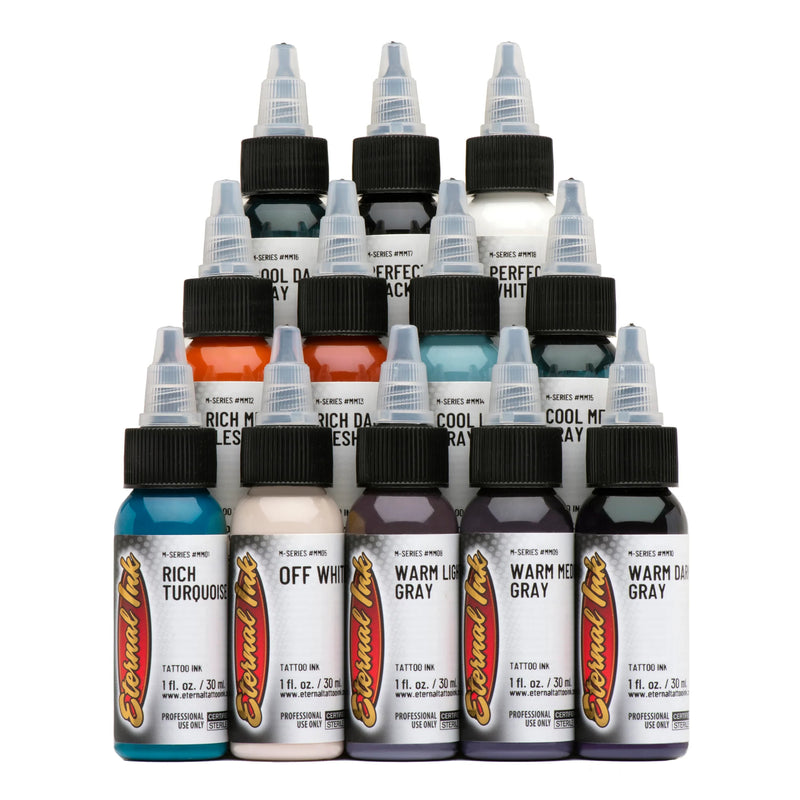
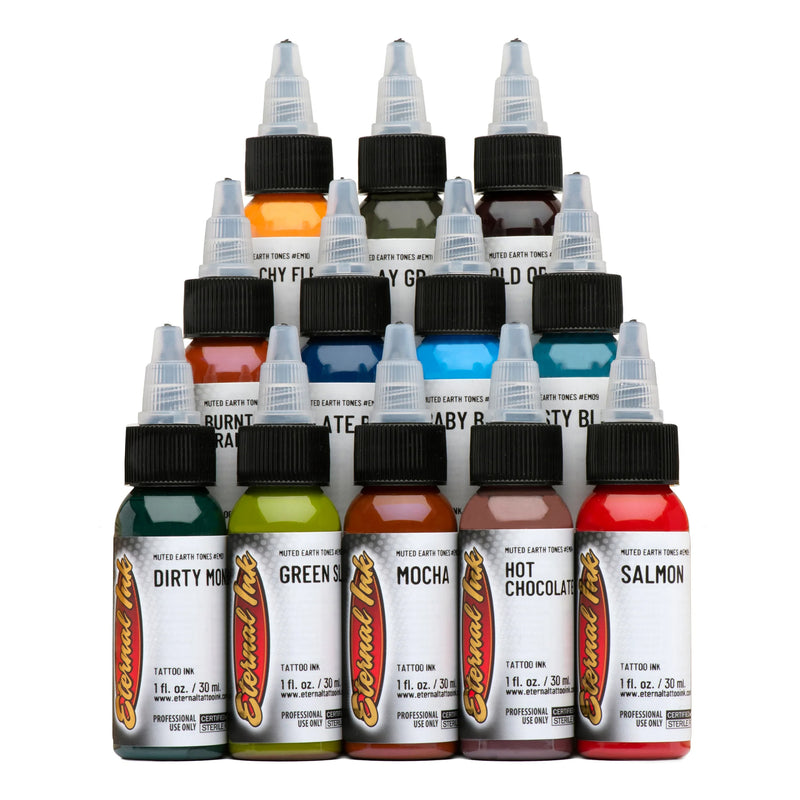
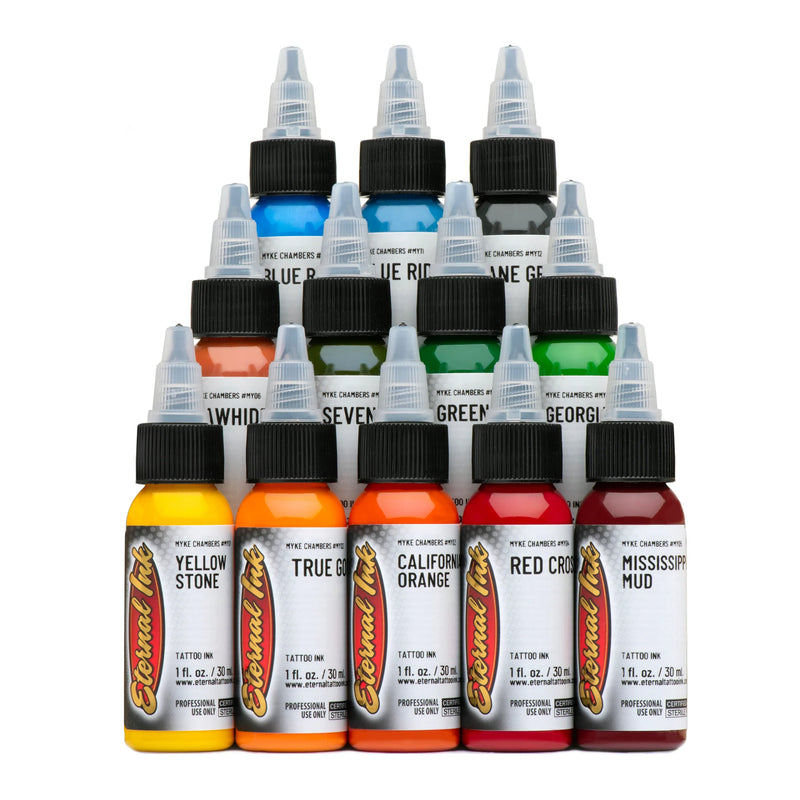
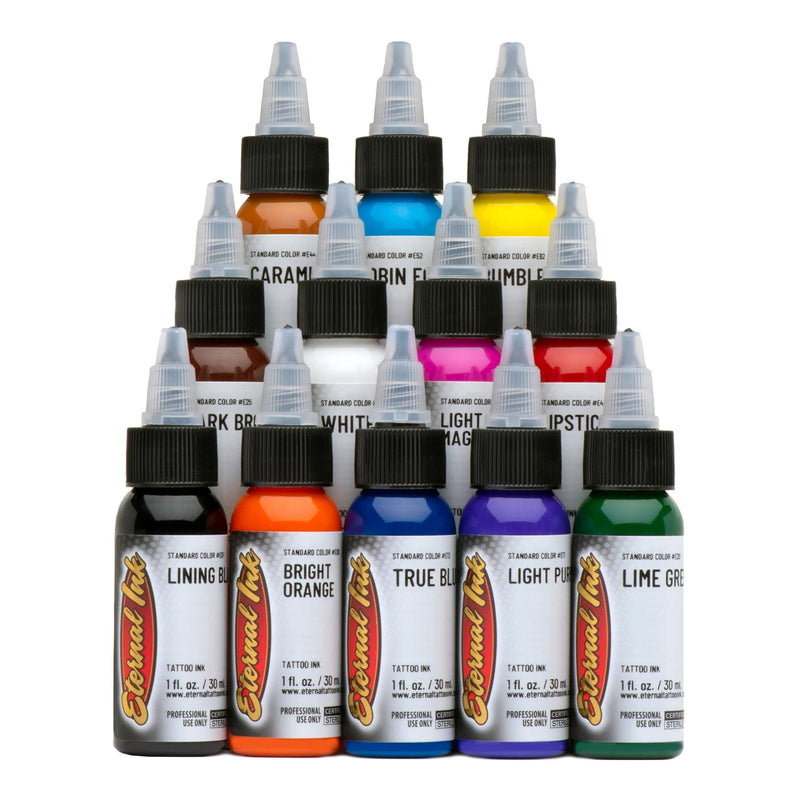
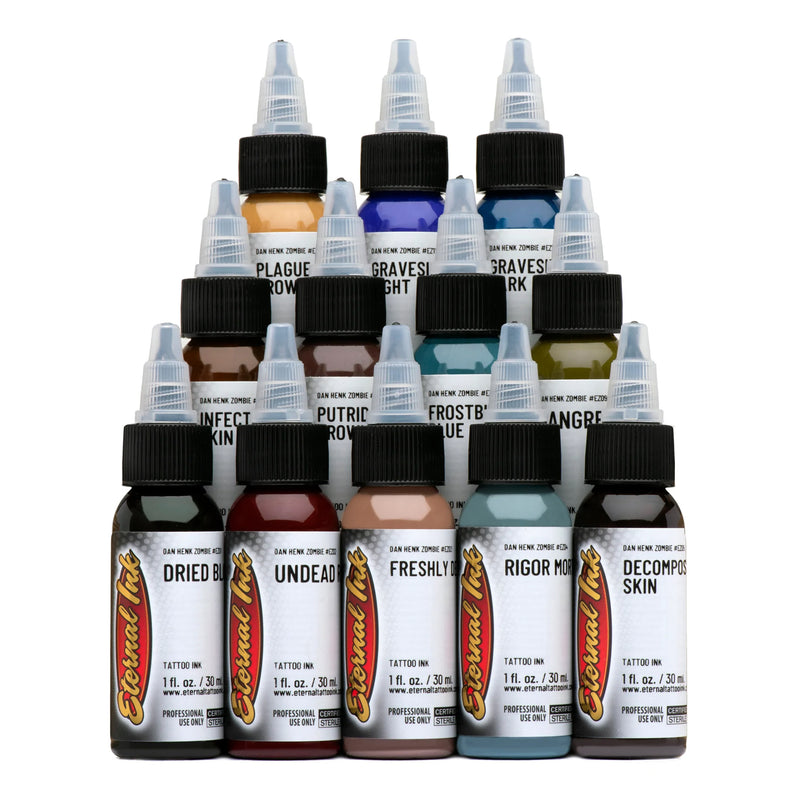
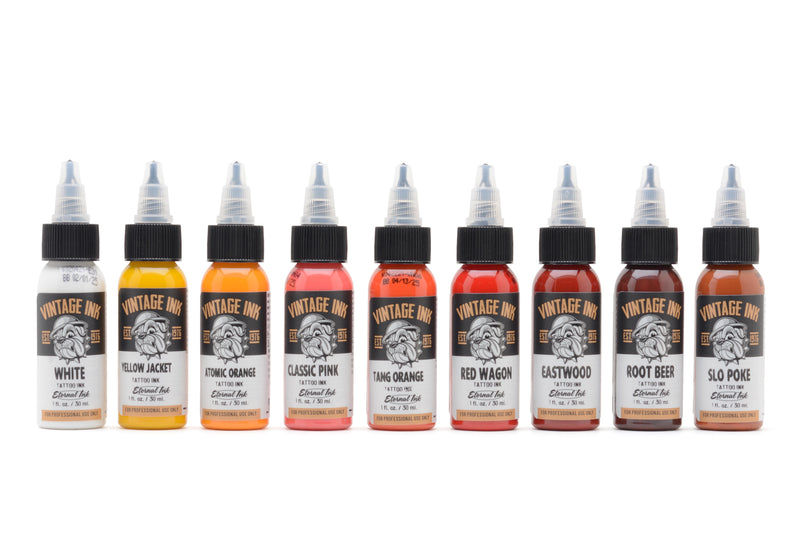
Eternal — the catalogue anchor for colour and lining: 300-plus colours and the most detailed ingredient disclosure of any brand we carry (Color Index numbers per colour).
-
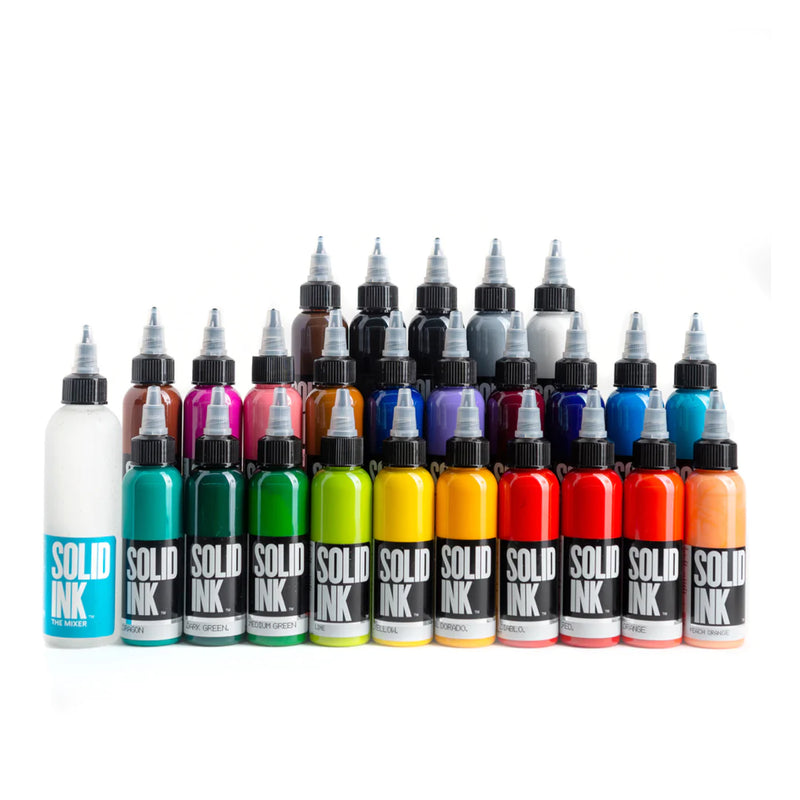
Solid — a reliable all-rounder for lining and packing; 100% vegan, with a published carrier base.
-
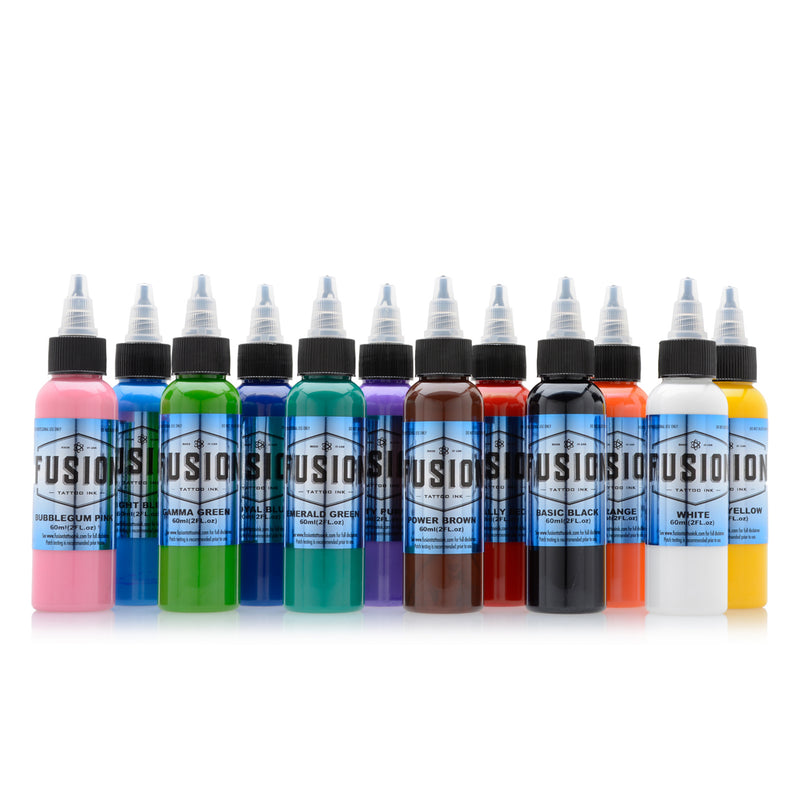
Fusion — smooth medium-body for colour and lining; high pigment load, a colour-realism favourite.
-
Panthera — Italian black-and-grey specialist; REACH-compliant, with a preservative-free black (Black Gold).
-
Empire — fine-art and wash work; pre-calibrated grey-wash sets for consistent tonal steps in portrait and realism.
-
Dermaglo — UK heritage colour brand; Eikon is the Canadian source, full range reliably stocked (Black Redi-Mix a long-loyalty lining black).
-
Kwadron — better known for needles and cartridges; its Inx Enriched Black is a single-product dense carbon black for blackout and packing.
A note on what you won't find here: we don't stock Dynamic, despite the searches; the last section explains why Eikon doesn't carry it, and what matches it.
Ink Sets or Singles: How to Build a Palette
Both have a place, and the right answer depends on how you work. A set earns its keep when the colours are calibrated to work together — Empire's grey-wash sets, for instance, give you pre-mixed tonal steps that hold a consistent value from light to dark, which is genuinely hard to mix by hand reliably for portrait and realism. Signature palettes work the same way: a curated range an artist built to cover a style without you guessing at ratios.
Singles are how you keep the workhorses stocked — your lining black, your most-used greys — and how you build a palette that matches your own work rather than someone else's. Most working artists end up with both: a set or two for calibrated colour ranges, and singles of the colours they burn through. If you're starting out, a set in your main style is the faster route to a coherent palette; if you've been at it a while, you already know which three colours you reorder every month.
Choosing Ink by the Work — Lining, Shading, Colour, Blackwork
Matching ink to the work is mostly about viscosity and particle size, how the ink flows through a given needle and how it seats in the skin.
-
Lining wants an ink that pulls cleanly through a tight liner without dragging. A smooth-flowing lining black(Panthera Liner Black, or Solid's lining black) does this cleanly; Fusion's medium body lines and shades well too.
-
Packing and blackout want the opposite: a dense, high-carbon black that saturates in a single pass. Kwadron's Inx Enriched Black is built for this, not for fine lining, where a fill-density black can drift.
-
Black-and-grey and wash work want calibrated dilution. Empire's grey-wash systems and Panthera's blacks give you predictable tonal steps instead of mixing greys by eye mid-session.
-
Colour realism wants high pigment load and clean particle sizing so colours stay vivid and don't heal muddy, Fusion and Eternal's broad catalogue cover most palettes.
The mistake worth avoiding is using a fill-density black for fine lines: the same particle physics that make it pack solid make it spread under a small needle. Match the ink to the job and most "bad ink" problems quietly disappear.
Does the Colour Hold? What Stays Black and What Fades
Different colours age differently, and knowing the pattern lets you set honest expectations with a client.
Black is the most durable, but it can shift. Over years, some black heals toward a blue-grey, artists call it "going blue." That's an optical effect of light scattering through the skin over the pigment, not the ink breaking down; a dense, well-packed carbon black resists it better than a thin or over-diluted one. The blacks Eikon carries are chosen partly for how cleanly they hold.
Warm tones and pastels are the other end of the spectrum. Yellows, oranges, and high-white pastels absorb the most UV and fade the fastest, often within a few years, and faster still without a solid black outline to contain them. That's a category property, not a brand defect: it's worth telling a client up front that the brightest, lightest values are the ones most likely to need a touch-up. Reds sit in between, and red is the colour family with the longest-documented sensitisation history (the naphthol reds), a separate conversation from fading.
None of this is a reason to avoid colour, it's a reason to build the piece so it ages well: bold structure, honest timelines, and the right black doing the heavy lifting.
Is Professional Tattoo Ink Safe? What "Clean" Actually Means
"Clean" is the word most ink searches are really reaching for, but most of the adjectives attached to it aren't standards you can hold a brand to. Here's what maps to something verifiable.
What's regulated, and what matters, is the impurity limit. Every ink legally sold in Canada is accountable to Health Canada's benchmarks on toxic heavy metals — lead at or under 10 ppm, arsenic and cadmium 3, mercury 1, antimony 5 — and the ISO 17516 microbial limits, enforced after an ink is on the market. That's a real, documented bar, and it already applies to everything on this page.
The marketing words are softer than they sound. "Organic" isn't a certified ink category, in pigment chemistry it just means carbon-based. "Non-toxic" and "OSHA non-toxic" have no agreed standard behind them (OSHA doesn't test or certify products at all). "Heavy-metal-free" is usually a misnomer, because iron, titanium, and copper are the pigment, iron oxide is the black, titanium dioxide the white. "Vegan" is the most concrete of the bunch, no animal-derived ingredients, and effectively the default across the brands Eikon carries, but it's self-asserted per brand, not third-party certified, and Kwadron's Inx line makes no vegan claim, so verify rather than assume.
Each of these has its own page that goes deeper. The honest through-line: trust what a brand actually discloses, ingredient lists, SDS, Health Canada compliance, over the adjective on the front of the bottle.
Buying Tattoo Ink in Canada: What You Don't Have to Deal With
The useful thing about buying through Eikon is everything you don't have to deal with. Tattoo inks are regulated as cosmetics in Canada, which means every ink has to be notified to Health Canada (the Cosmetic Notification Form, filed within 10 days of first sale), and the manufacturer is responsible for keeping it within Health Canada's heavy-metal and microbial benchmarks, which Health Canada enforces after an ink is on the market. The brands Eikon carries have notified, so the ink on the shelf is from a Health-Canada-notified brand, and you're not the one chasing notification paperwork. The full Canadian lineup, brand by brand, is on the tattoo ink Canada page.
That's the honest version of "compliant": Eikon only carries brands that are compliant and have done that work. It's worth being precise that clearing the bar isn't a promise that any product is reaction-free for every client, it means the regulatory work is done, not that biology is canceled. (One credential worth scoping correctly: Eikon's Health Canada Medical Device Establishment Licence covers the professional needles and cartridges it distributes, not the ink, which is regulated separately as a cosmetic — a device licence, not an ink claim. There's a dedicated Canada page if you want the full compliance picture.)
Why Eikon Doesn't Carry Dynamic — and What to Use Instead
Dynamic is one of the most-searched blacks in the trade, so it's worth being straight about why it isn't on this page. The reason is administrative, not a safety verdict: Dynamic hasn't completed Health Canada's notification requirements for the Canadian market, so it isn't in Eikon's catalogue. That's a paperwork gap on the manufacturer's side, not a finding that the formula is unsafe, and not us passing judgment on an ink a lot of artists trained on.
If Dynamic is what you're reaching for, here's what matches it from the catalogue:
-
For Dynamic BLK (the smooth, fast-flowing lining black): Panthera Liner Black or Solid Lining Blackclosely match the flow and clean line.
-
For Dynamic Triple Black (dense blackout and packing): Kwadron Inx Enriched Black matches the dense carbon load.
These aren't identical formulas, different companies, different carriers, but they match on what made you reach for Dynamic: flow, carbon density, and how the black holds.