USA
USA
 Canada

Tattoo Needles - Tattoo Needles
Filters
Products:
Tattoo Needle Types & Configurations
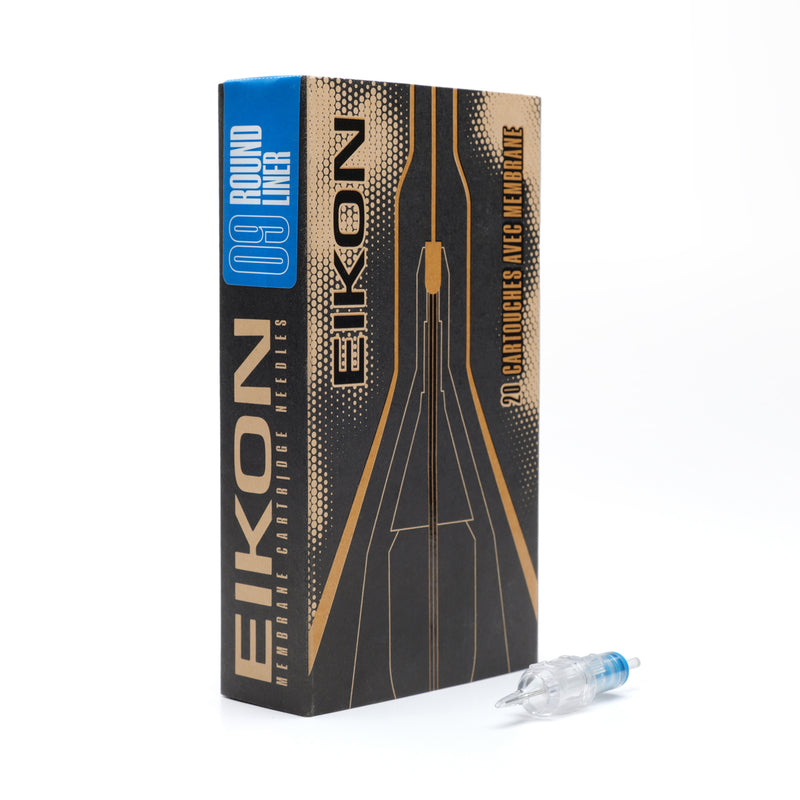
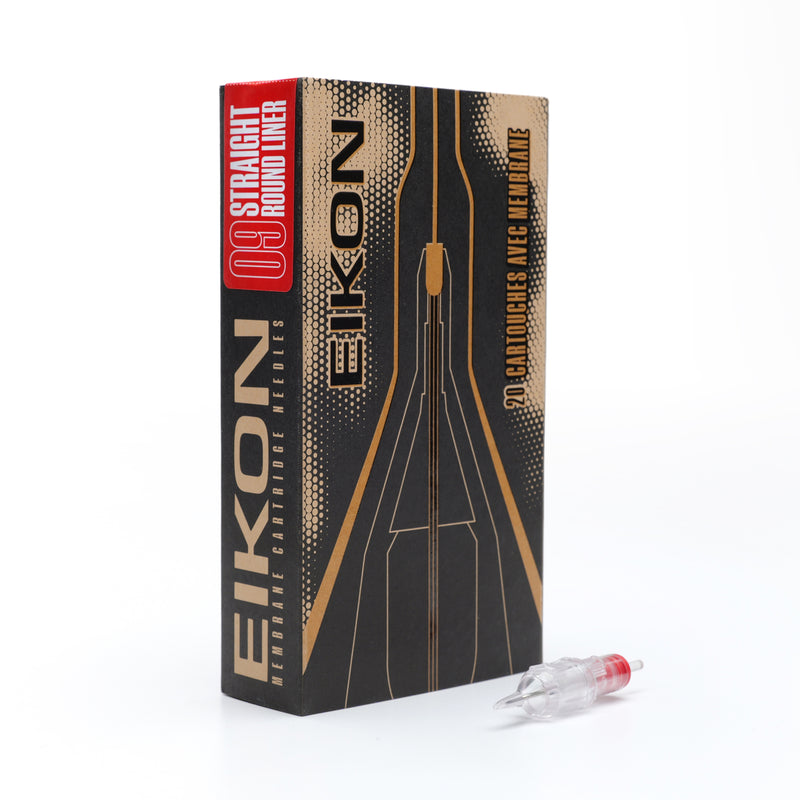
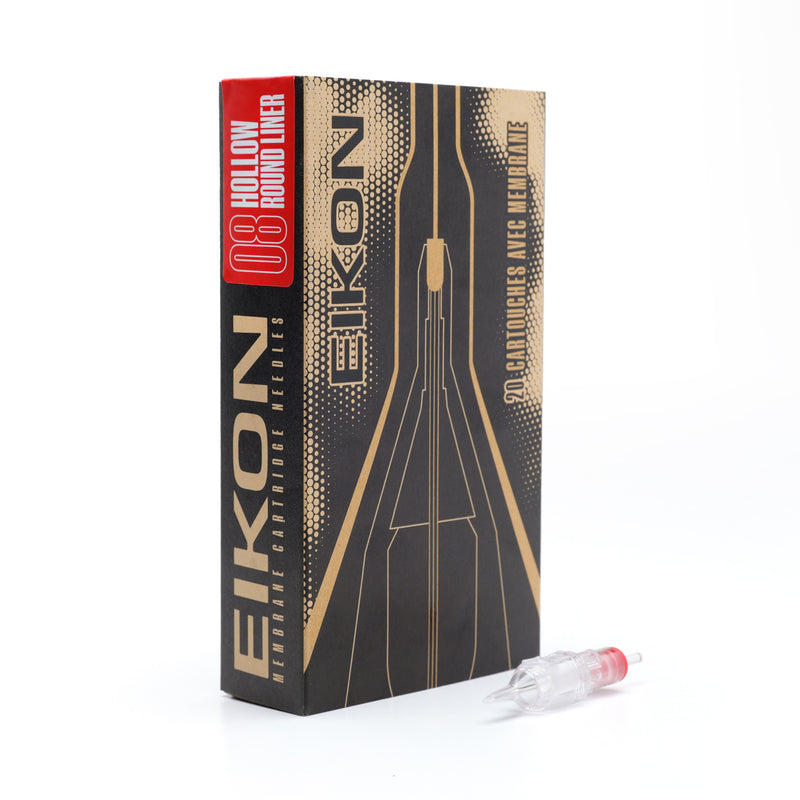
Round Liners (RL) are configured in a tight circular grouping designed for lining. The tighter the grouping, the crisper the line. Standard RLs deliver the crispest lines. Straight Round Liners (SRL) use a lower soldering point for bolder lines with faster ink delivery. Hollow Round Liners (HRL) remove the centre needle for bold lines with less skin trauma and fewer passes.
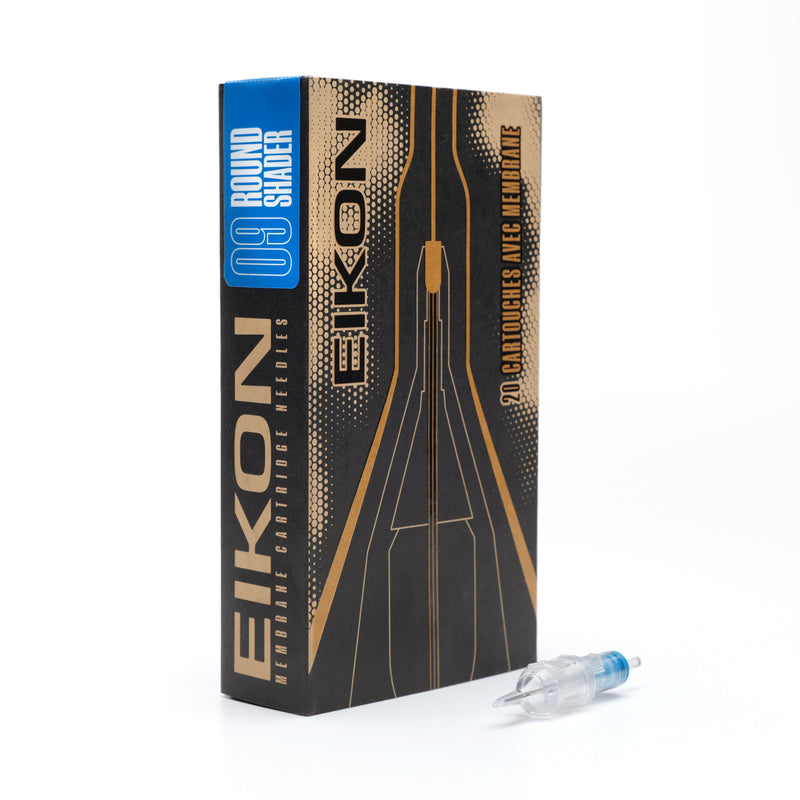
Round Shaders (RS) use a looser circular arrangement than liners. Designed for detail shading, building gradual tonal transitions, and working in smaller areas where a magnum would be too wide. Same round grouping as a liner but engineered to fill rather than line.
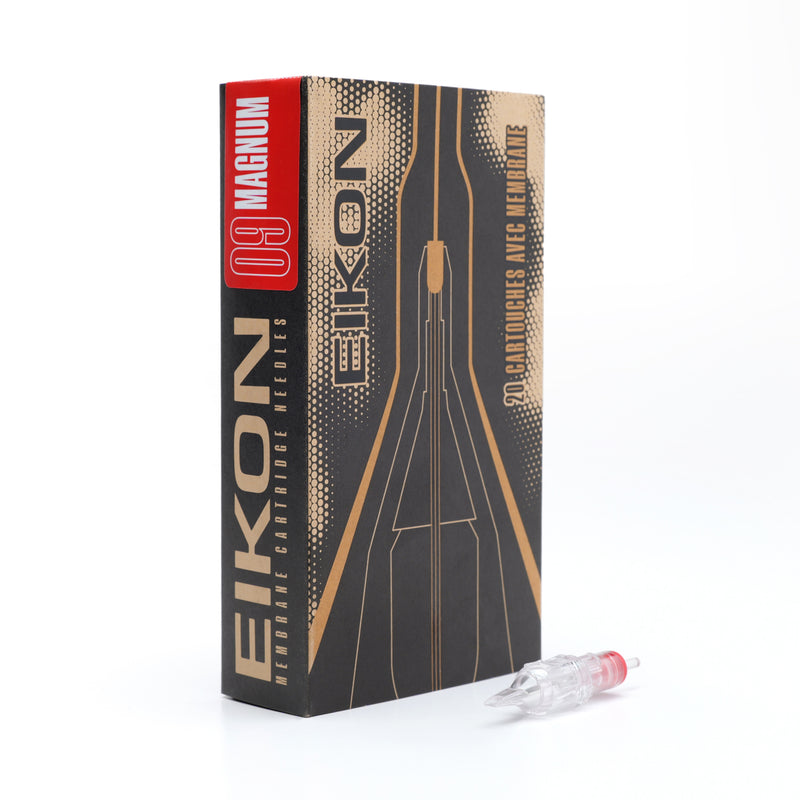
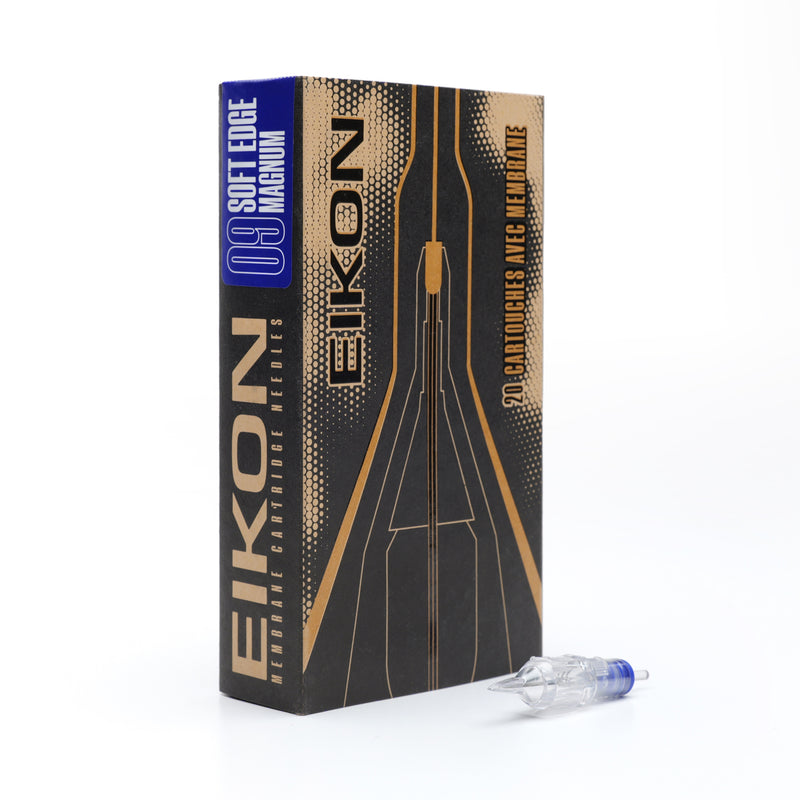
Curved Magnums (soft edge) arrange needles in an arc where the centre needles extend further than the edges. This creates a profile that blends gradients without hard lines and follows body contours smoothly. Standard Magnums use the same two-row arrangement but with a flat profile. The sharp edges give precise control for working against lines, into corners, and for geometric shading. These are different tools for different jobs, not interchangeable.
Flat Shaders arrange needles in a single straight line. Largely historical in cartridge format, though still available in traditional pre-made needles for artists who use them.
How to Choose the Right Tattoo Needle
Match configuration to the job. Tight round liners for crisp outlines and linework. Curved magnums for large-area shading and colour gradients. Standard magnums for defined edges and geometric work. Round shaders for detail shading in tight spaces.
Needle count determines line weight or coverage area within a configuration. Lower counts (3RL, 5RL) for fine detail. Higher counts (9RL, 14RL) for bolder lines. But count is only half the equation: a 5RL in 0.25mm produces a finer line than a 3RL in 0.35mm because count and diameter interact to determine the actual line weight on skin.
Diameter determines puncture size and ink deposit per pass. 0.25mm (bugpin) for fine lines and tight groupings. 0.30mm for a middle option. 0.35mm (standard) for bold work and maximum ink deposit. Bugpins are one of Eikon's top-selling diameters. Artists use them for everyday lining as well as detail and micro-realism work.
Taper determines how the needle enters the skin. Long taper creates less resistance per strike and less trauma, making it the default for most work. Medium taper has a blunter tip that deposits more pigment per pass. It is about saturation efficiency, not depth control. In Eikon's cartridge lineup, medium taper appears in select curved magnums designed for colour packing. Other brands Eikon carries offer medium taper across more configurations.
Round Liner Needles for Precise Linework
Tight round liner configurations (3RL through 14RL) deliver controlled ink for sharp, precise linework. In cartridge liner needles, Eikon includes a stabilisation system in every liner configuration (RL, SRL, HRL) that keeps the needle running straight on every stroke. This reduces chatter and keeps needles sharper longer.
Smaller counts (3RL, 5RL, 7RL) handle fine-line work, intricate details, and script. 7RL is a strong all-purpose liner. The 1-centre-plus-6-outer arrangement fills area with zero centre gap. Larger counts (9RL, 11RL, 14RL) produce bolder outlines for traditional work and larger lettering.
The liner progression gives artists three options beyond standard RLs. Straight Round Liners (SRL) use a lower soldering point for bolder lines with faster ink delivery. Hollow Round Liners (HRL) remove the centre needle for bold lines with less skin trauma and fewer passes. All three RL, SRL, and HRL include Eikon's stabilisation system in the cartridge versions.
Diameter choice matters as much as count for linework. Bugpin (0.25mm) produces the finest puncture and tightest groupings. Eikon's top-selling liner diameter. Standard (0.35mm) delivers bolder punctures with more ink per pass. The 0.30mm offers a middle option. Eikon's colour-coded cartridge housings identify diameter at a glance: Purple (0.25mm), Blue (0.30mm), Red (0.35mm).
Shader & Magnum Needles for Shading and Colour
Curved magnums (soft edge) are the most versatile shading configuration. The centre needles extend further than the edges, creating a profile that blends gradients without leaving hard lines even when you work across body contours. Eikon offers 20 curved magnum configurations across all three diameters and both taper lengths, making it the deepest lineup in the cartridge range.
Standard magnums use the same two-row arrangement but with a flat profile that gives sharp, defined edges. The right tool for working against lines, filling geometric shapes, and shading into corners where a curved mag's soft edges would bleed past where you want to stop.
Round shaders are the precision shading tool for smaller areas. Detail shading, gradual tonal transitions, and tight spots where a magnum would be too wide. The looser grouping deposits more ink per pass than a liner of the same count.
Taper choice matters for shading. Long taper is the default because it enters the skin with less resistance and less trauma per strike, ideal for smooth gradients. Medium taper deposits more pigment per pass for colour packing and saturation work. Even though each strike is more forceful, fewer passes can mean less total trauma and faster coverage. Eikon offers medium taper in Red Label curved magnums specifically for this reason.
Understanding Needle Diameter & Taper Length
Needle diameter is the thickness of the individual wire. It determines puncture size, ink deposit per pass, and how fine or bold the result is. Eikon offers three diameters: 0.25mm (bugpin), 0.30mm, and 0.35mm (standard). Diameter is not a quality ranking. Each serves a different purpose depending on the detail level and ink deposit your work requires.
Bugpin (0.25mm) produces the finest puncture and tightest groupings. The 0.30mm gives artists a middle option, fine enough for detailed work but with slightly more ink delivery than bugpin. Standard (0.35mm) creates bolder punctures with more ink per pass, the go-to for traditional-style work and colour packing.
Long taper is the default. 90% of Eikon's needle line uses long taper. The finer point creates less resistance per strike, less trauma, and smaller puncture holes. Medium taper has a blunter tip that holds more ink at the point of contact and deposits more pigment per pass. It is about saturation efficiency, used in select configurations designed for colour packing.
Eikon's colour-coded cartridge housings identify diameter at a glance. Purple (0.25mm), Blue (0.30mm), Red (0.35mm). The colour travels from the box to the cartridge base, visible even when cartridges are loose on your station. Diameter is the one specification you cannot see on the needle itself, which is why Eikon chose to colour-code for it.
Cartridge Needles vs. Traditional Needle-and-Tube Setups
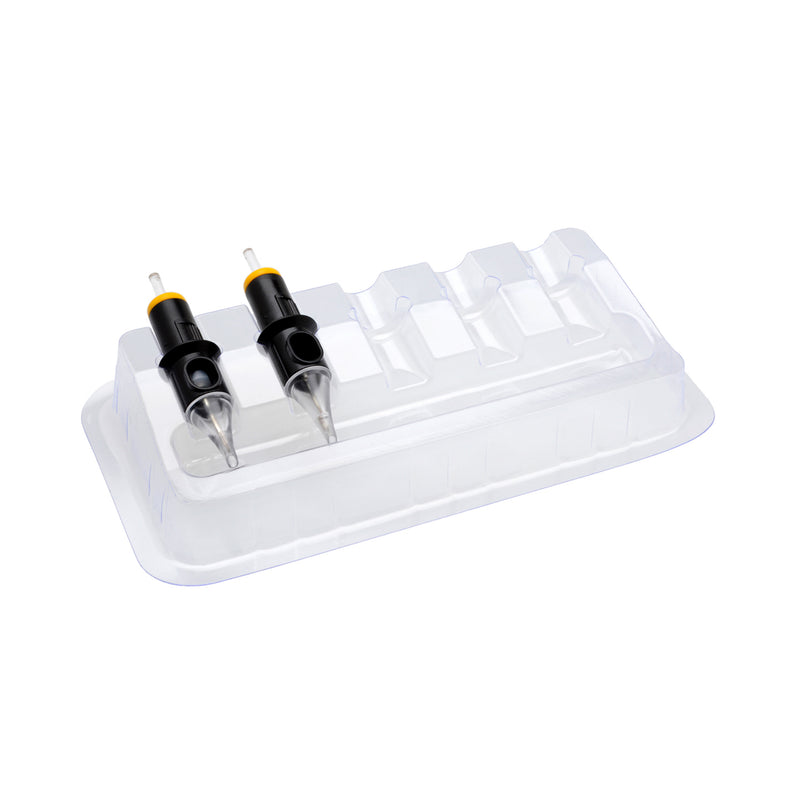
The difference between cartridges and traditional needles is workflow, not quality. Both deliver professional results for lining, shading, and colour packing. Traditional setups use separate needles and tubes (either reusable stainless steel or disposable) that the artist assembles and matches. Cartridges combine needle, tip, housing, and membrane into a single disposable unit. Eikon manufactured traditional needles for 30 years before building cartridges, so this is not a matter of one being better.
The biggest practical advantage of cartridges is speed of setup changes. Go from lining to shading with a cartridge swap that takes seconds, versus breaking down and rebuilding a traditional setup with a different needle and tube. For artists who work across multiple configurations in a single session, cartridges keep the work moving.
Traditional needle-and-tube setups offer customisation that cartridges do not. Artists can custom-solder configurations to personal preference, tune machines for a specific feel, and work with the weight and power profile of coil machines that some artists genuinely prefer. Pricing between cartridges and traditional is now comparable.
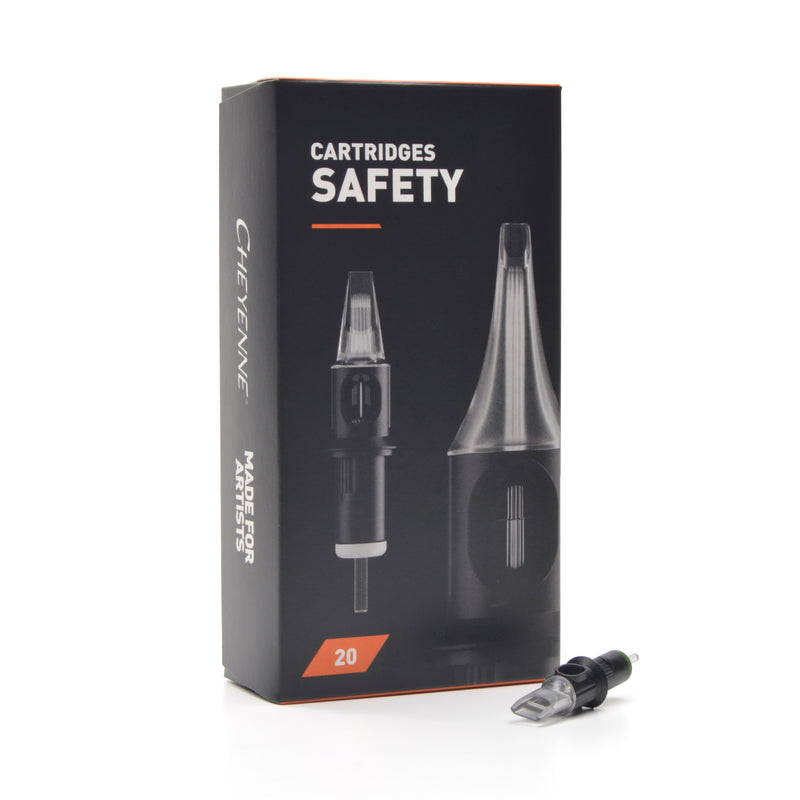
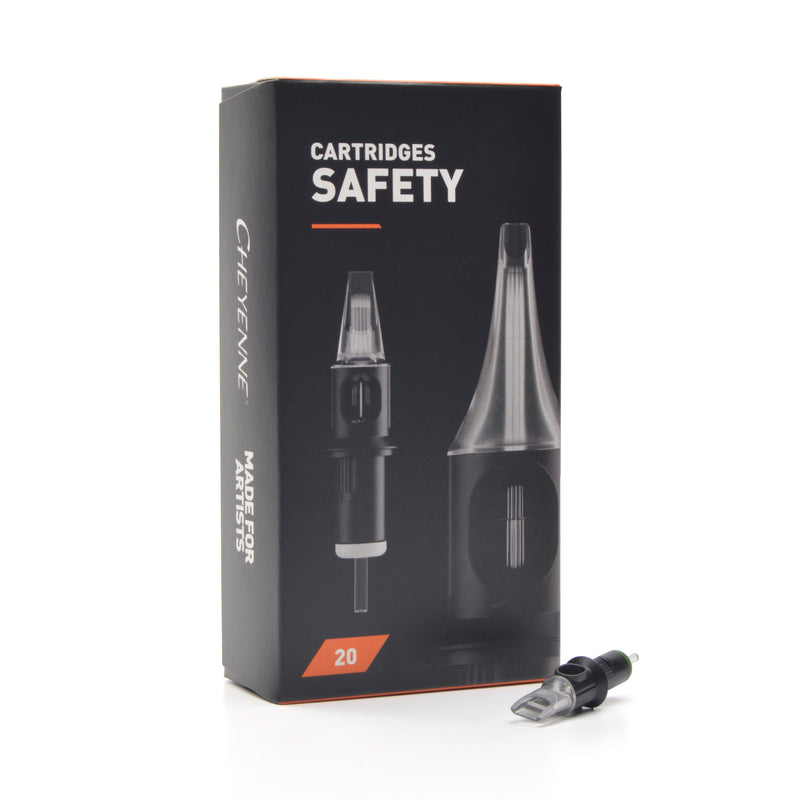
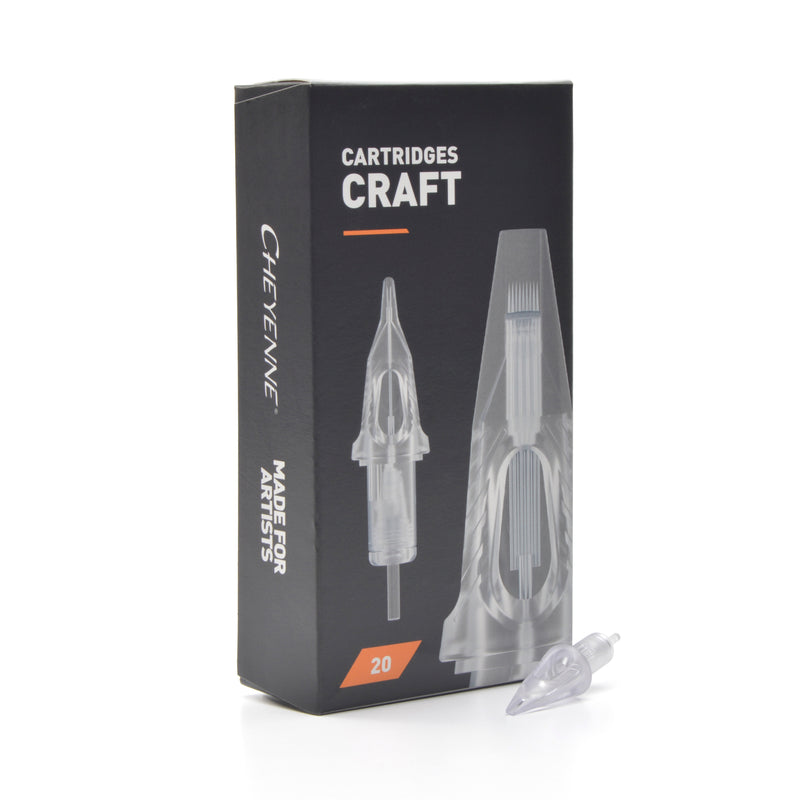
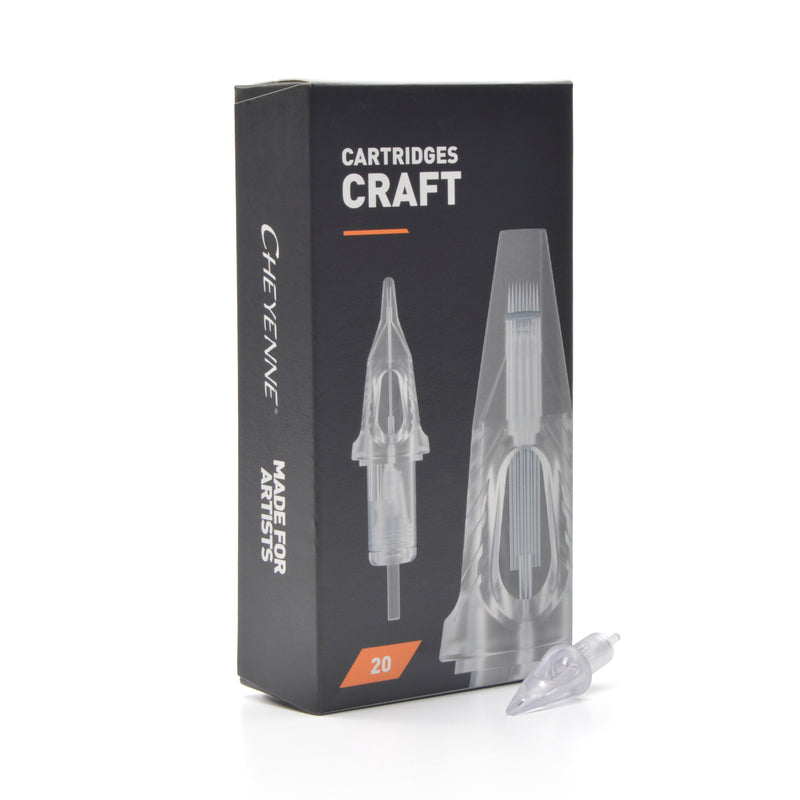
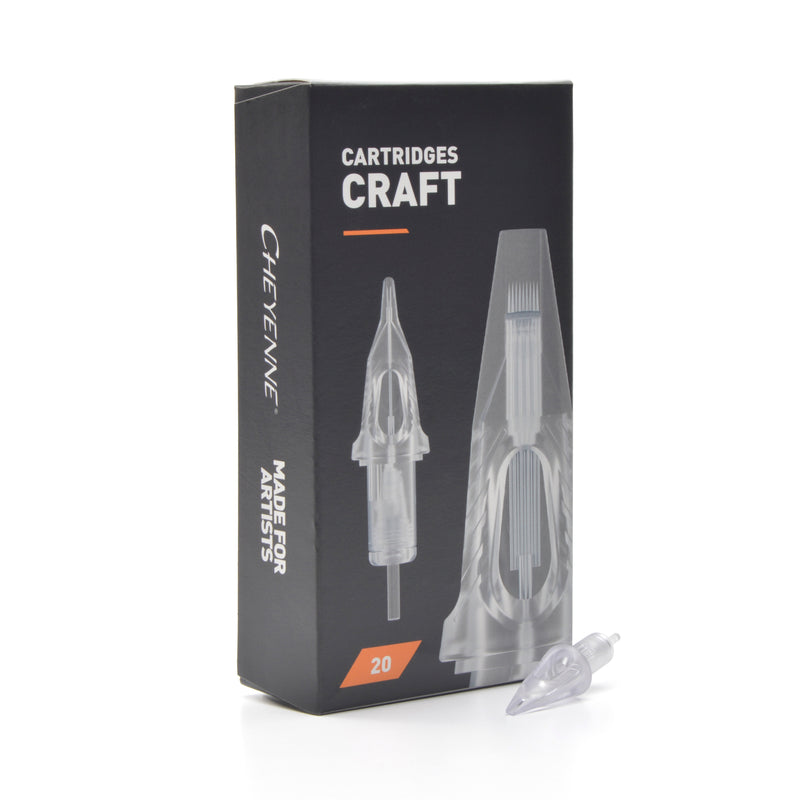
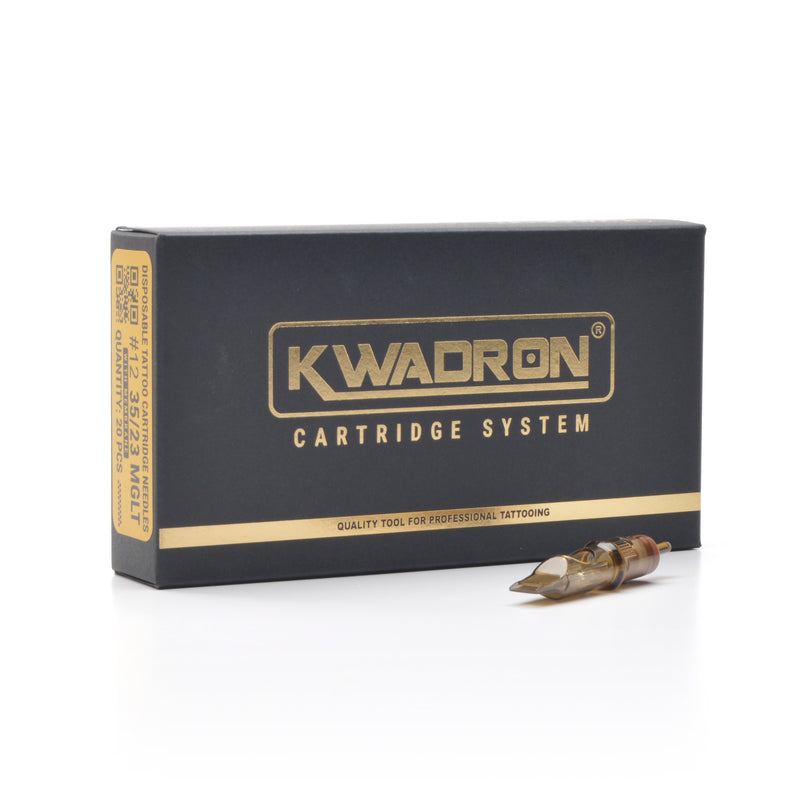
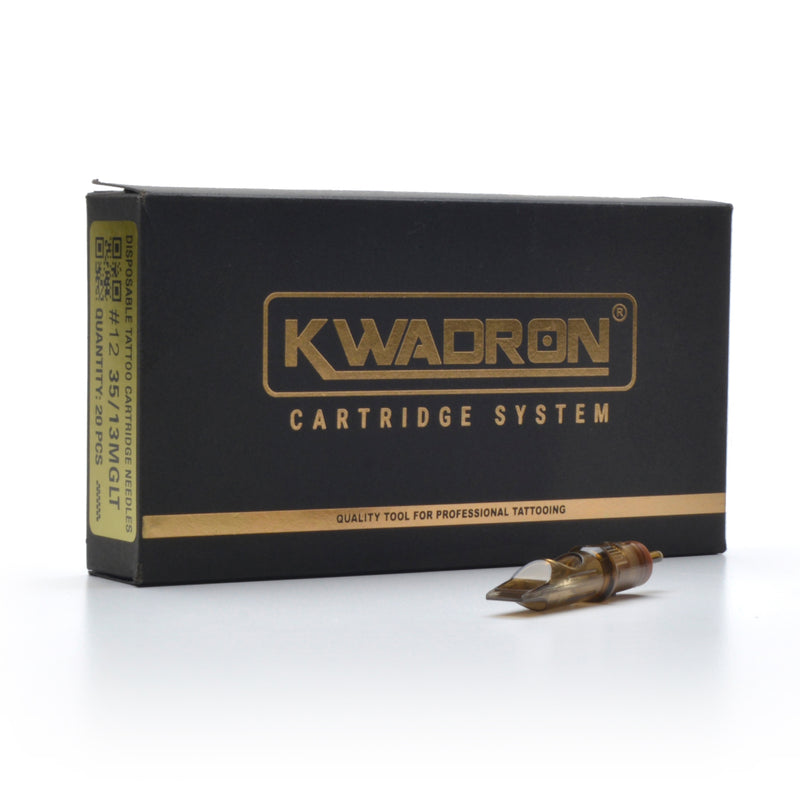
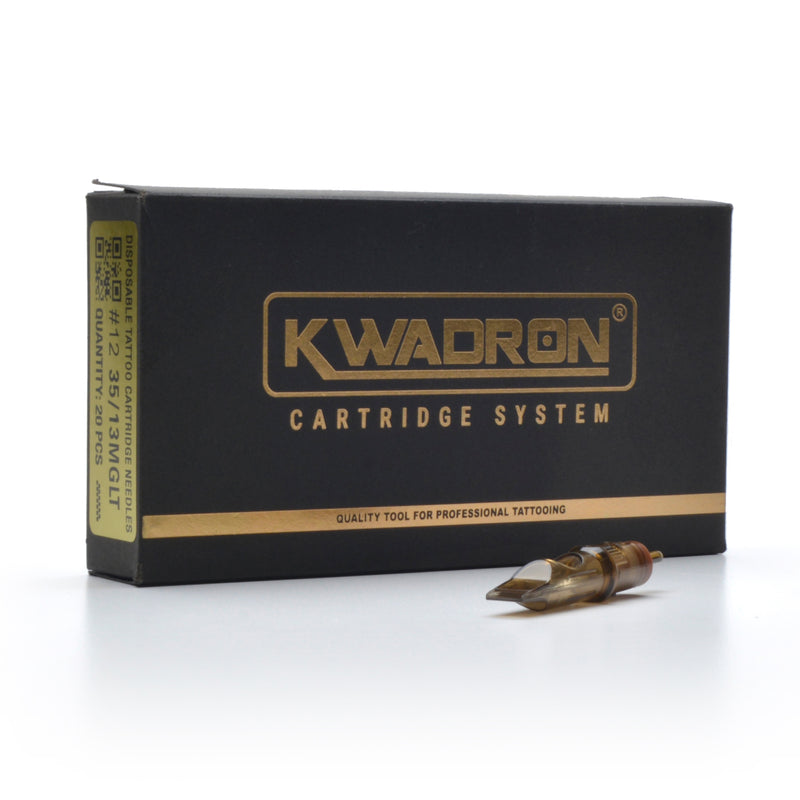
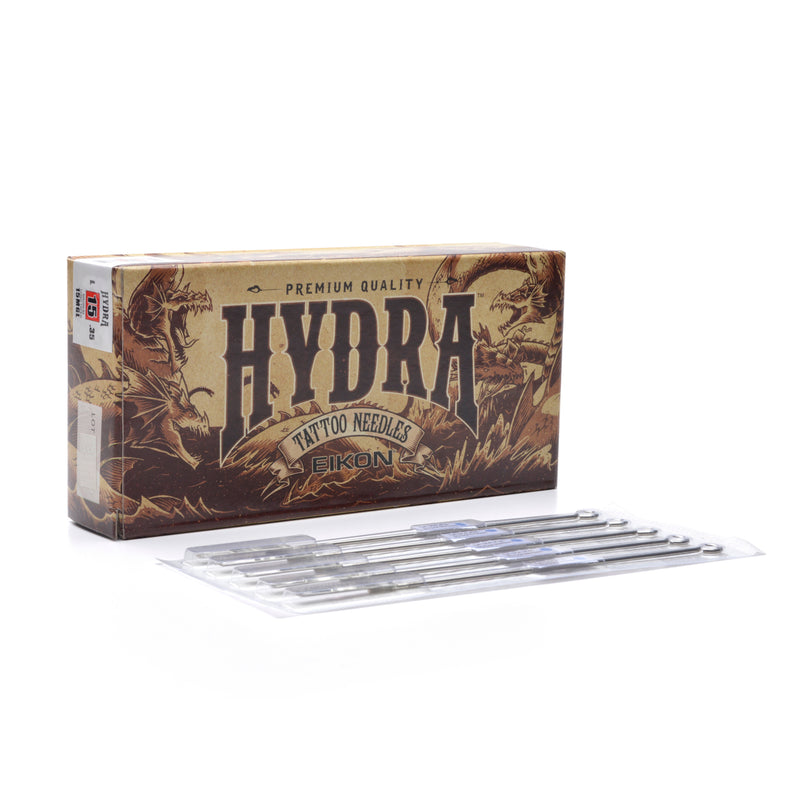
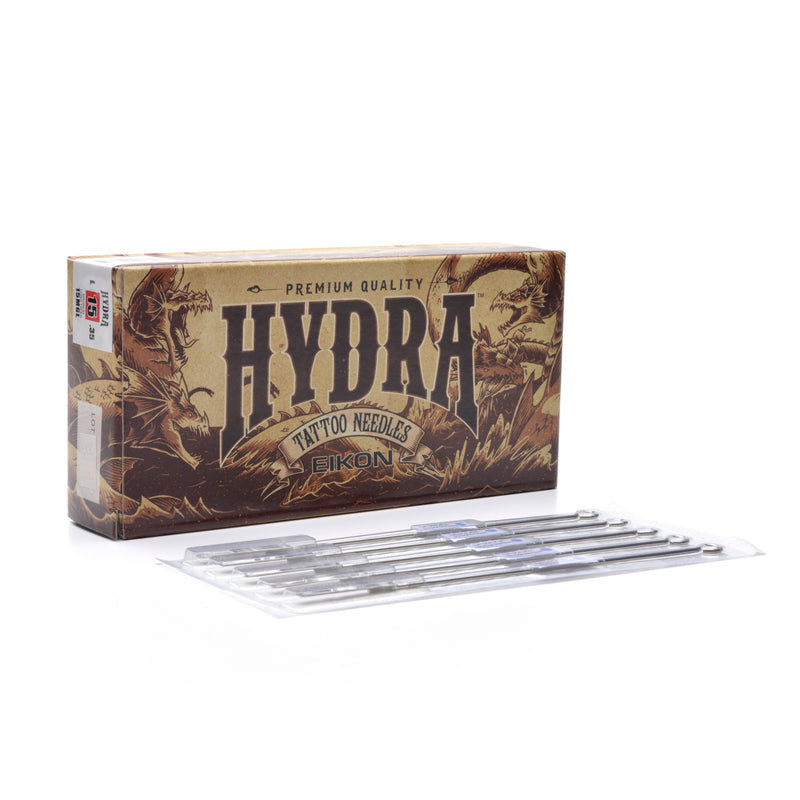
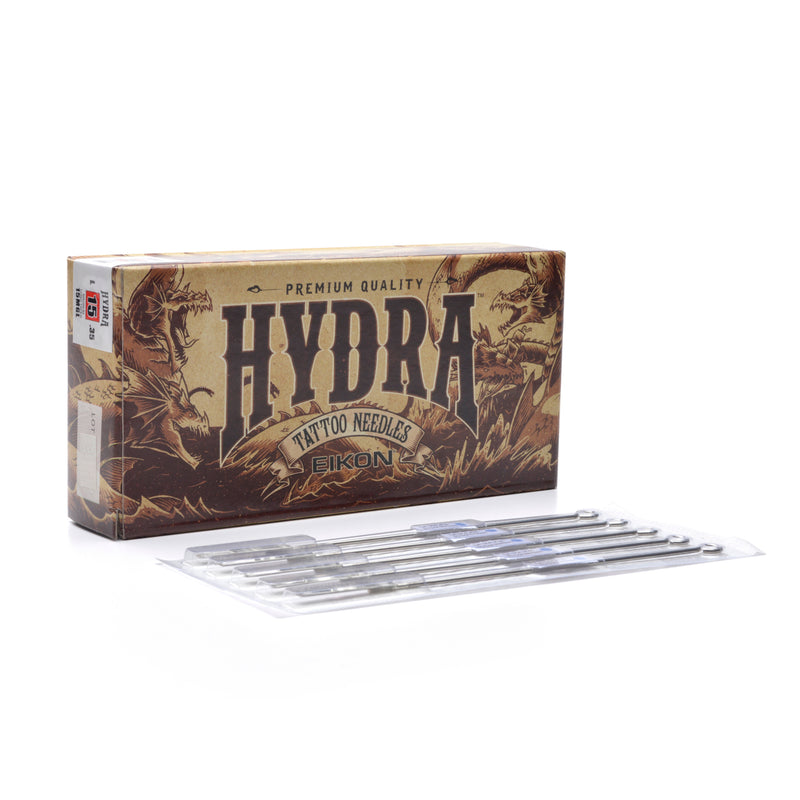
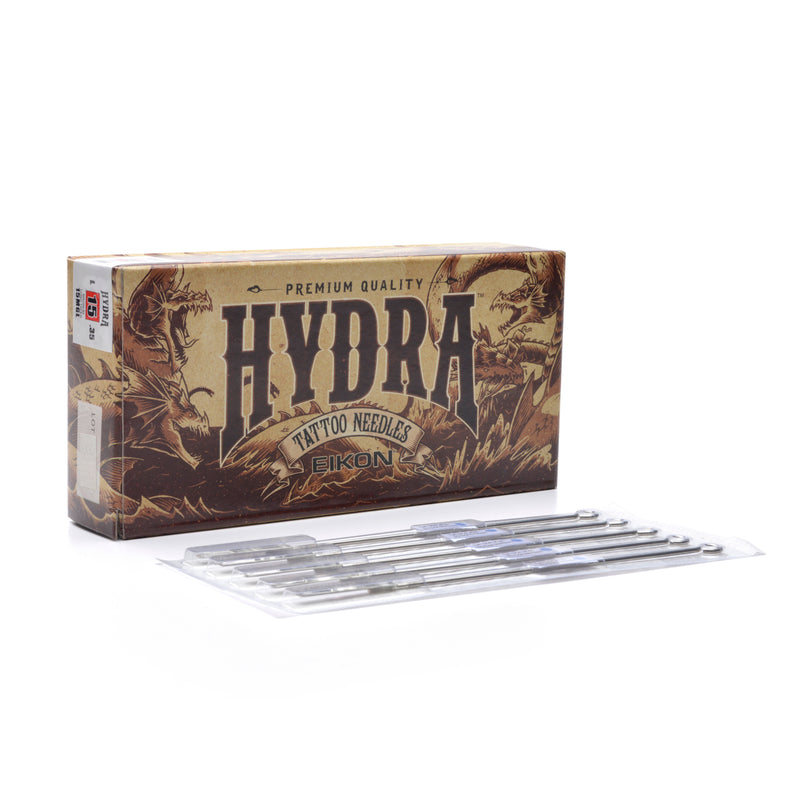
Eikon carries both. Eikon Cartridges, Kwadron, Cheyenne, TEX, and Lotus cartridges alongside Hydra pre-made bar needles and Griffin Tubes for traditional setups. All cartridges are compatible with all pen-style machines, including Bishop and Cheyenne rotary machines and other cartridge grips we carry in store. Browse the full tattoo machine needle and cartridge range for every configuration across brands.
Quality Features & Machine Compatibility
Quality needles and tips differ in ways you feel during the session. Consistent needle sharpness across every cartridge in the box. Diameter consistency between batches. A membrane that delivers the same recoil at hour six as it did at hour one. One-piece molded tips mean the tip will not pop off when you wipe down during colour changes, a known issue with two-piece designs. Clear tips let you see needle placement and confirm the cartridge is clean.
In liner cartridges, stability is the quality differentiator, whether you're doing traditional tattooing or PMU work. The needle should run straight whether you are working slow detail or pushing through longer lines. Eikon includes a stabilisation system in every liner cartridge (RL, SRL, HRL) that reduces chatter and keeps needles sharper longer. We hear from artists and PMU practitioners alike who switched from coils to Eikon cartridges for their linework.
All cartridges Eikon carries are compatible with all pen-style and rotary tattoo machines. Bishop, Cheyenne, and every other standard cartridge grip. If a cartridge ever feels loose or pops off, check the grip and machine tolerances first. A properly seated cartridge in a quality grip should click in firm and stay put through the session.
Eikon Tattoo Supply carries cartridges from brands we trust. Kwadron for their precision manufacturing and consistent groupings. Cheyenne for their patented cartridge designs. TEX for reliable performance. Lotus, for which Eikon is the official and exclusive Canadian distributor. Our own Eikon Cartridges line rounds out the selection with 50+ configurations across 6 groupings, 3 diameters, and 2 taper lengths.