USA
USA
 Canada

Tattoo Cartridge Needles - Tattoo Cartridge Needles
Filters
Products:


What Are Tattoo Cartridge Needles?
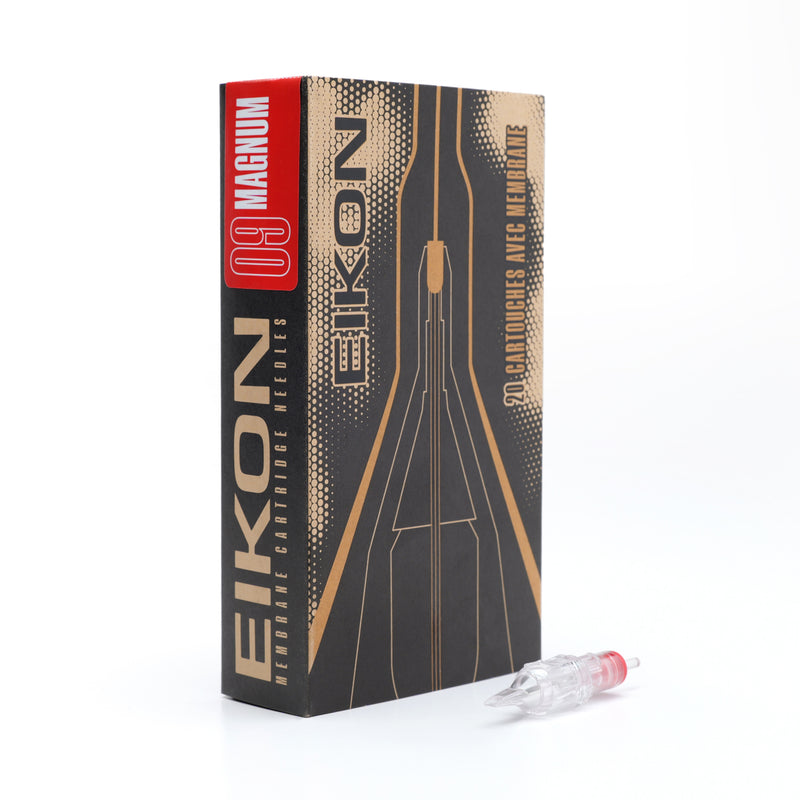
Cartridge needles are made of several components that each influence the cartridge's performance.The needle grouping aka configurations, membrane, and housing all combined into one sterile disposable unit. “Old school” traditional needle setups required separate tubes, grips, and needle bars—and while that is not the most common setup any longer, traditional needle on bar setup still needs disposable tubes on top of the needle itself. Pen machines, and rotary machines, run lighter and quieter than coil machines, reducing hand fatigue and cable juggling during long sessions.
One of the big conveniences from cartridges is that the all-in-one system allows you to switch from a 3-round liner to a 9-curved mag without changing machines. Pull the cartridge out, snap a new one in. No need to have multiple machines setup or mid-session adjustments.
The safety membrane—a sealed bladder inside the housing—does two important jobs: first, it protects your pen machine from ink and fluid backflow. Backflow voids warranties on machines like the Bishop Wand, Cheyenne Sol Nova, Mast Tour, T7Max and TATSoul Envy Gen 2. Some health departments even require cartridges to have a sealed membrane for cross-contamination prevention but as you know you should always check your local requirements as they vary from region to region.
Although cartridges are “new” they also went through some evolution. Earlier cartridges were made with a two piece mold housings where the tip could pop off when you wiped it – while they’re still available, they’re not as popular. One-piece molded tips eliminated that problem. The tip stays put through the entire session.
How to Choose the Best Tattoo Cartridges for Your Style
Start with what you actually use for your style of tattooing. If you’re into Traditional, Japanese, Neo-trad, delicate Fine Line, Watercolor, and Realism each of those will require different configurations to do the job well. If your workhorses are bugpin (0.25mm) 3-round liners, find a brand that stocks them reliably and ships them consistently sharp and where the diameter doesn’t fluctuate between production runs. Consistency matters beyond the needle tips. Solder length and taper length can drift between batches — meaning your 0.25mm 3RL pulls a thicker line this month than it did last month.
The best cartridge is the one that shows up on time, it’s always in stock, and delivers the same lines you’re expecting with no throwaways. Something we’re proud to say Eikon is known for!
Listen for rattle or chatter. Feel for wobble. A quality cartridge sits snug in the machine grip and on your finger — no twisting or popping off during the session. The needle should run true, and liners should feel stable. If it sounds loose or feels unstable, you should be looking for a different quality of cartridge.
Stock reliability matters. If your workhorse liner or round shader is always backordered, you're dealing with supply chain anxiety every time you check your shelf. Eikon stocks Kwadron, Cheyenne, Deadly North’s TEX, LOTUS and Eikon-branded cartridges with same-day shipping across Canada.
Tattoo Cartridge Needle Configurations Explained
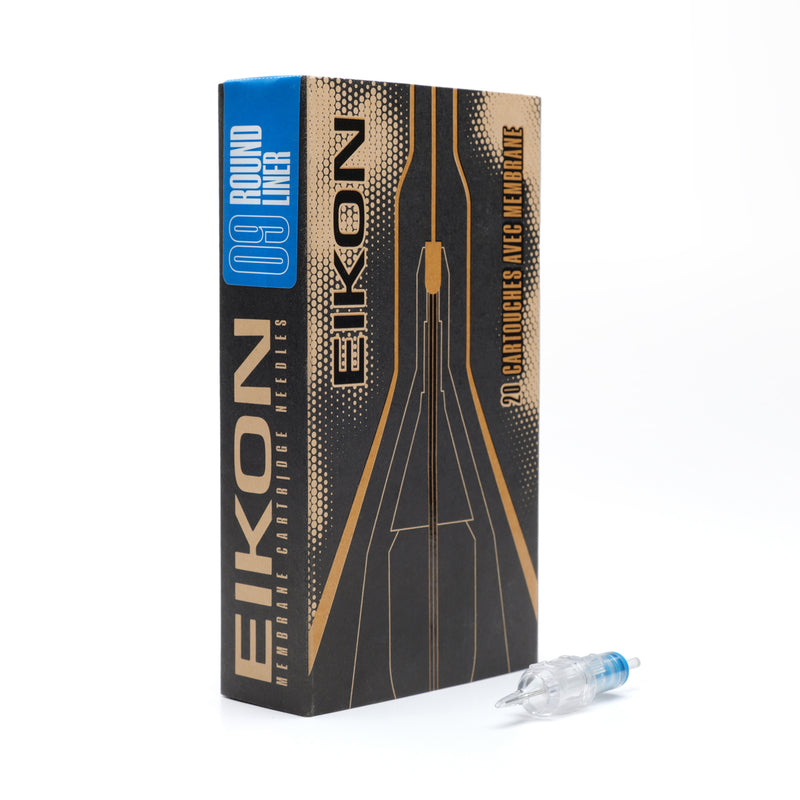
Round liners (RL) are built for clean, ultra-crisp lines. The needles are soldered in a tight circular grouping, delivering controlled ink flow and sharp definition. The tighter the grouping, the more controlled the ink flow—perfect for detail work and precise linework.
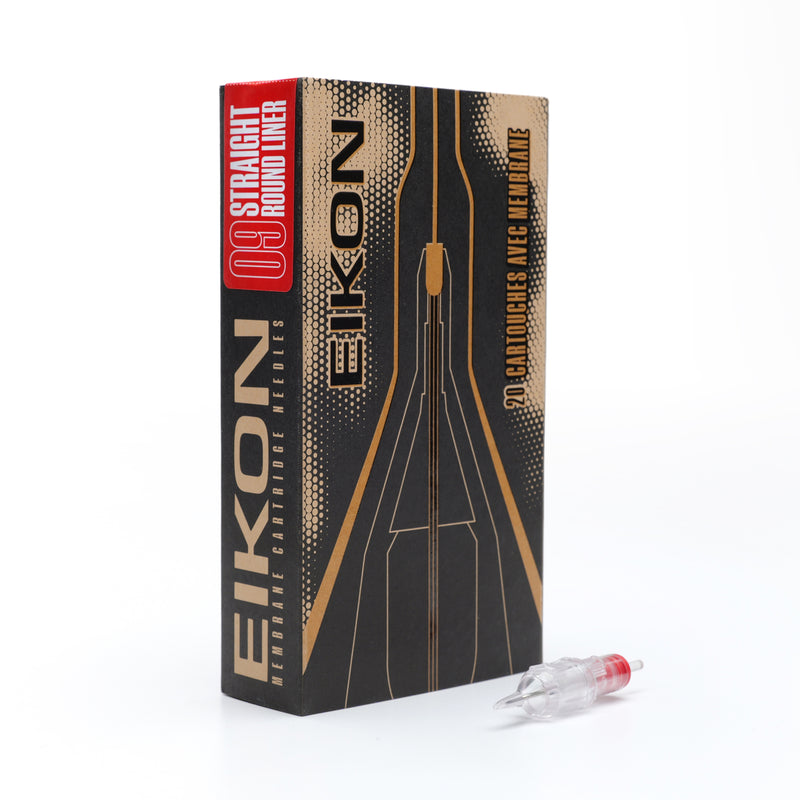
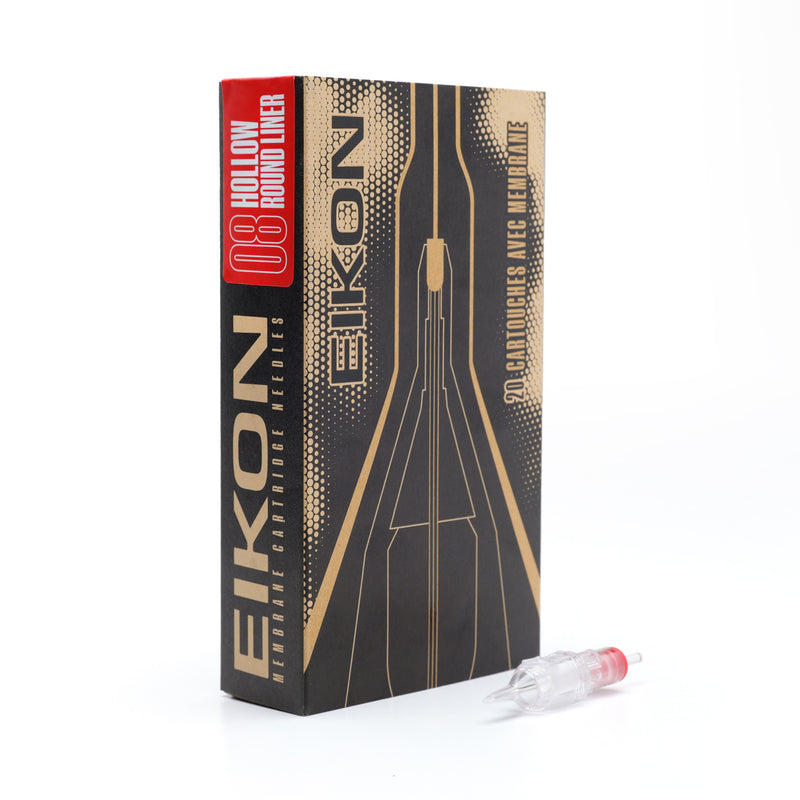
Straight round liners (SRL) and hollow round liners (HRL) handle bolder, single-pass lines with more ink saturation. The looser grouping packs more pigment per stroke. Use them when you need to produce a larger, thicker line.
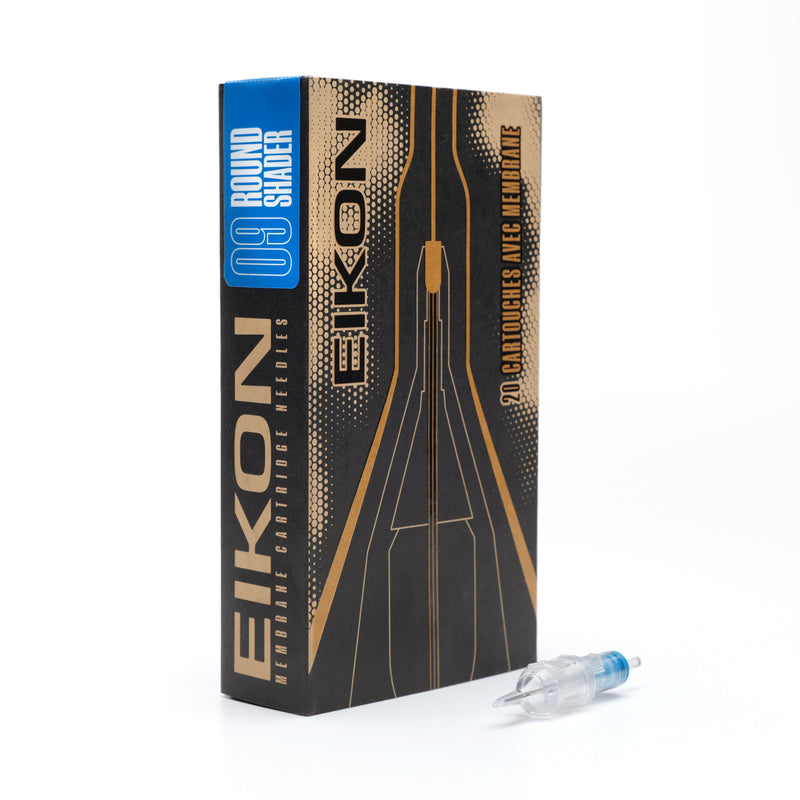
Round shaders (RS) are the softer, looser circular alternative for shading and colour-packing in tight spaces where a magnum is too bulky.
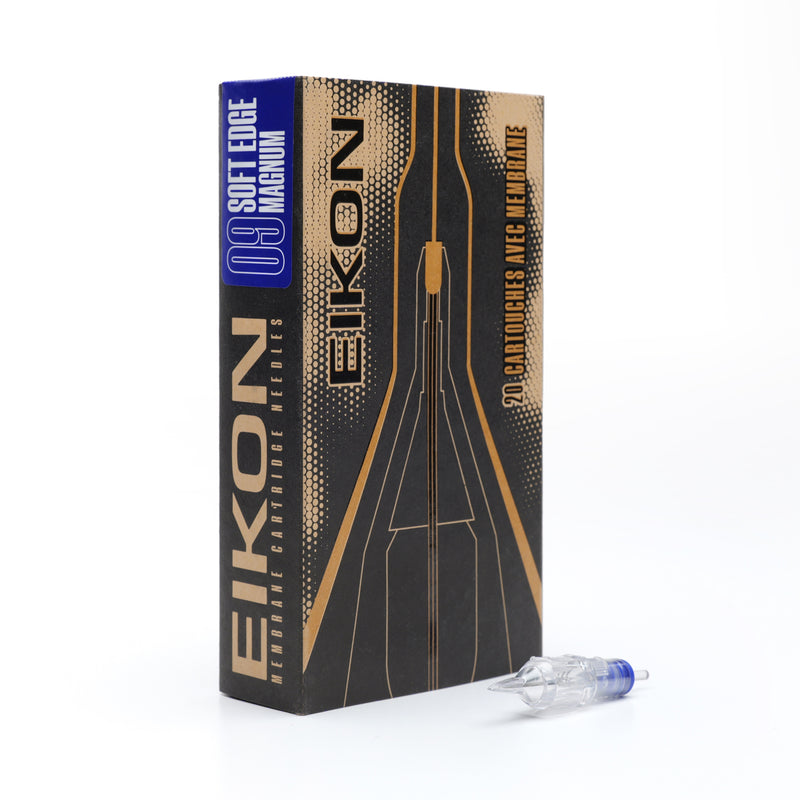
Standard magnums or flat mags deliver solid fills and defined edges. Soft edge magnums (SEM) — also called curved mags — move smoothly around body contours without catching. They're forgiving on curved surfaces and blend more naturally than straight-edge configurations.
Understanding Needle Diameter and Taper Length
Needle diameter works like pixel resolution. Thinner 0.25mm needles (also called bugpin or #8s) provide higher-resolution detail—finer lines, tighter dots, intricate shading. Thicker 0.35mm needles (#12 or standard) pack solid color faster but with less fine control.
Eikon uses a 3-color code to identify diameters: purple for 0.25mm, blue for 0.30mm, red for 0.35mm. You can spot the gauge when cartridges are out of the blister pack in your station or in your drawer without having to read the label.
The length of a needle's taper determines the balance between ease of penetration and ink delivery. A long taper provides a fine-point geometry that glides into the skin, making it the standard for 90% of professional work where detail and minimal trauma are the priorities. Medium tapers—often called the "new short"—are designed with a wider point that pushes a larger "pixel" of ink into the skin with every hit. Although they are blunter and require more mechanical force from the machine to drive, they are the workhorses of color packing because they reduce the need for repetitive passes to reach full saturation
Pair a long taper with a 0.25mm diameter for intricate fine-line work. Pair a medium taper with a 0.35mm magnum for heavy color packing. The combination of diameter and taper will make it easier for you to achieve the result you’re looking for.
Premium Tattoo Cartridge Brands We Carry
Eikon has been making tattoo needles since 1994. And thousands of artists told us what brands they like and why. We filter out the hype and carry artist-tested brands that meet professional standards for membrane elasticity, high quality control tolerance, needle quality and a wide configuration availability.
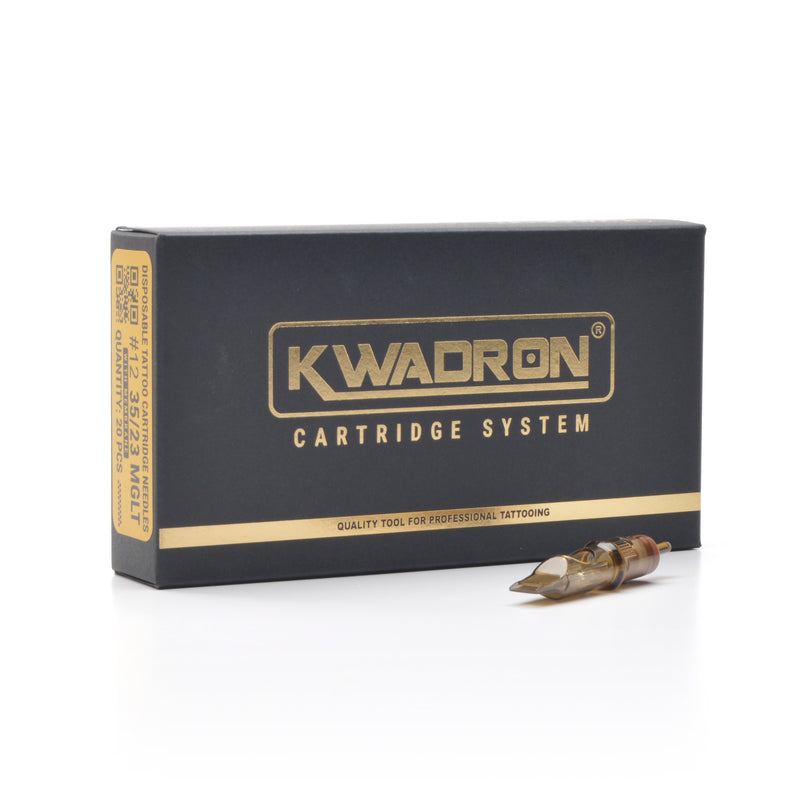
Kwadron set the bar for precision manufacturing. Consistent groupings, reliable membranes, and every diameter/taper combination you need. They're the gold standard because they deliver the same quality in box 50 as they did in box 1.
Cheyenne introduced the patented safety membrane that became the industry standard. A wide variety of options including two and one-piece molded tips, optimized vent holes make them a trusted name for artists running Hawk Pen II, FK IRONS, Kwadron Equalisers or any Sol Novas pen machine.
Eikon-branded cartridges bring 30+ years of manufacturing knowledge and tattoo supply expertise to a product line built for Canadian tattoo artists. High quality membrane standards, consistency box after box, stocked in Kingston, Ontario, Shipped fast with free shipping on orders of $150. No border delays, Health Canada registered, plus the best customer service support in tattooing.
Cartridge Compatibility with Tattoo Pen Machines
Most cartridges follow the Cheyenne-style standard, which fits most pen machines. The majority of brands fit the majority of machines. Compatibility issues come from two places: manufacturing tolerances and grip interference.
Cheaper machines sometimes have looser tolerances, so a cartridge that should technically fit ends up popping off. The grip you put on your machine also determines fit—some grips interfere with cartridge seating.
A fully sealed membrane protects your machine warranty, but using one doesn't guarantee coverage—that's up to the manufacturer's discretion. It's a requirement to not void the warranty, not a promise of coverage.
Does Push vs. Pull technique interferes with Ink Flow?
The answer is no. The slotted tip and vent hole manage ink displacement regardless of hand direction. This is about the cartridge's physical design, not tattooing technique.
Think of it like an apple juice can - you need two openings for the juice to flow. Air must displace ink to prevent vacuum locks that cause dry hits. The vent hole allows air to enter as ink flows down to the needles. Too small and you get vacuum lock, too large and you lose the surface tension that holds ink on the needles.
The housing acts as a reservoir, holding pigment through surface tension until the needle creates a capillary path into the skin. Consistent flow prevents spitting—when excess ink suddenly sprays onto the stencil and disrupts your rhythm.
Best Practices for Using Tattoo Cartridges
Pick a supplier that stocks what you need when you need it. Running out of your workhorse configuration mid-week kills momentum. Reliable stock is part of the product.
Good labels and colour coding matter. If you're grabbing cartridges mid-session, you need to tell the difference between a #8 (0.25mm) 7-round liner and a #12 (0.35mm) 9-round shader without reading the fine print. Clear labeling on the box and the cartridge body saves time.
Test the membrane return with your machine. Some artists prefer a firmer snap, others want it softer. The membrane's recoil has to match how your machine drives. If it feels off, try a different brand.
Consistency is non-negotiable. Cheap cartridges that force you to toss needles aren't saving you money. A professional box should be 20 usable needles out of 20. No exceptions.
The cartridge body shape, colour, and design are personal preference. Some artists want a finger notch for grip. Others prefer a smooth barrel. Pick what feels right in your hand for long sessions.
Shop your tattoo needle cartridges, power supplies, and accessories from trusted tattoo suppliers that have been in the industry for a long time. Don’t buy from Amazon. Eikon carries both cartridge and premade needles on bar supplies for professional tattooers and PMU artists across Canada.