USA
USA
 Canada

Tattoo Liner Cartridges - Tattoo Liner Cartridges
Filters
Products:



What Are Tattoo Liner Cartridges?
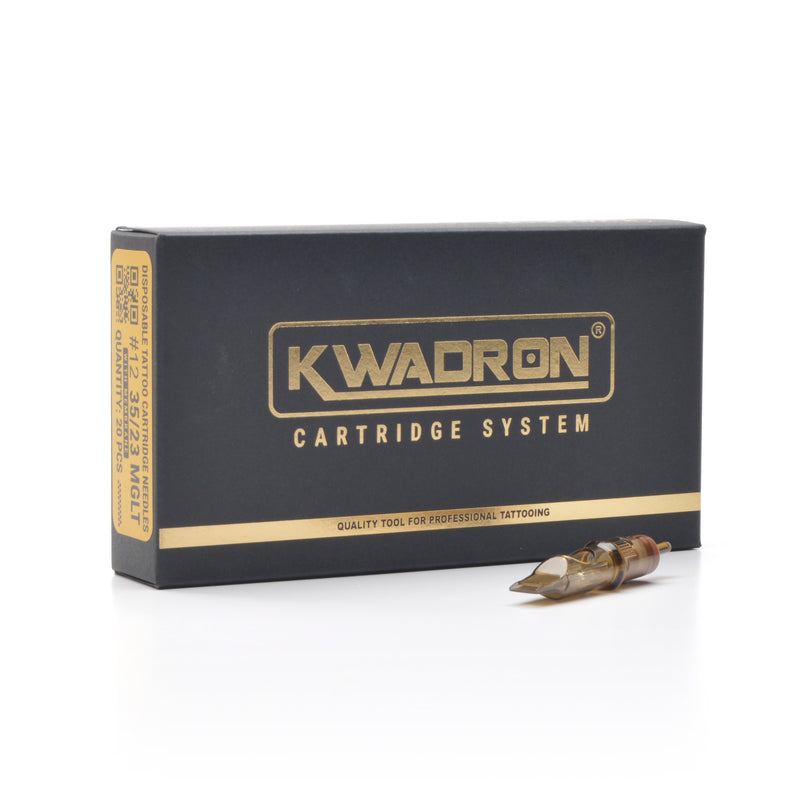
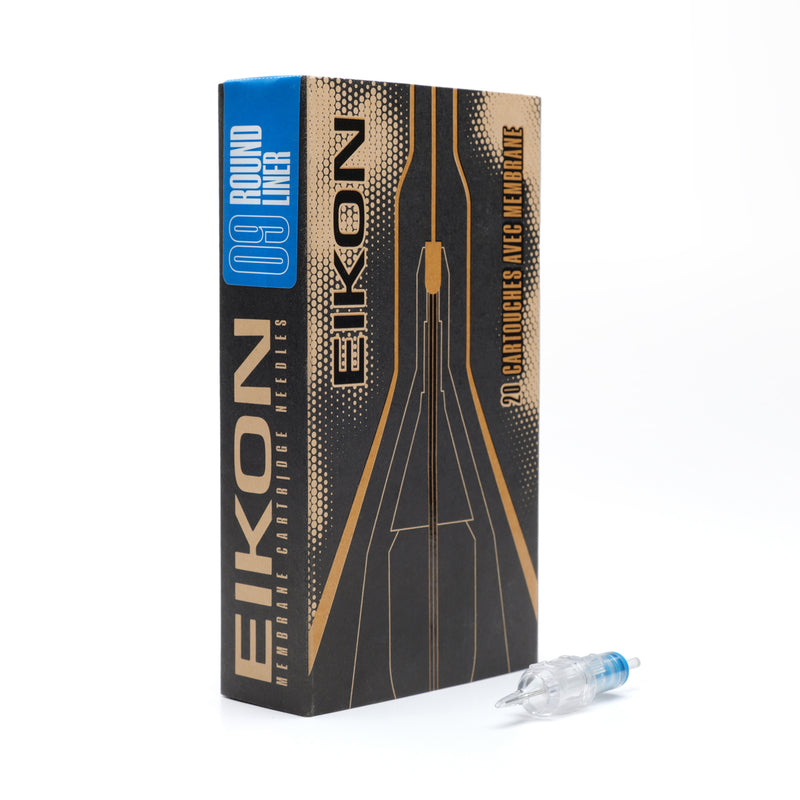
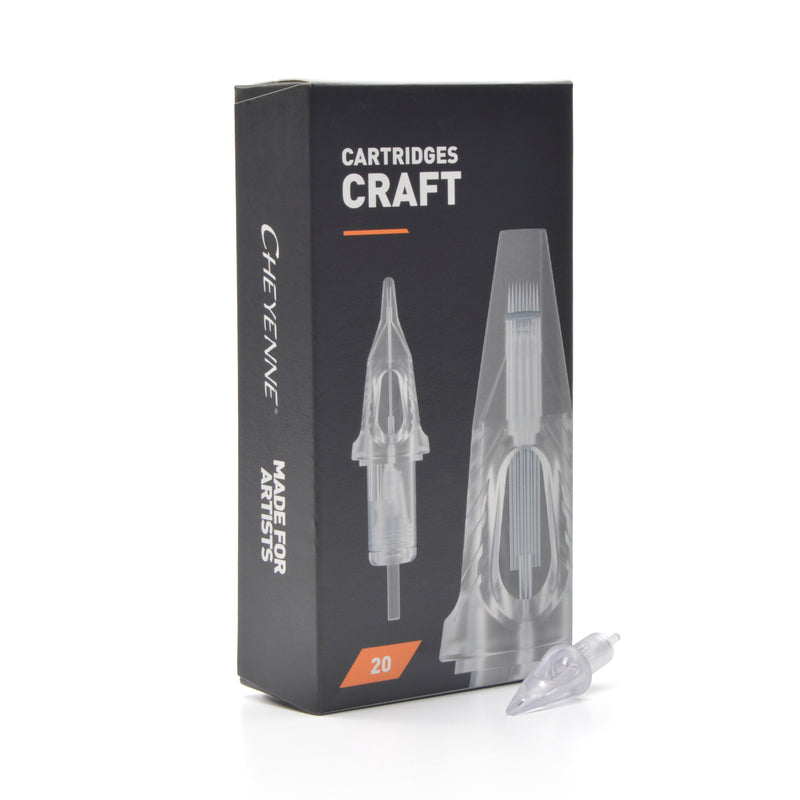
Liner cartridges are self-contained round liner needle systems. The needle grouping, tip, membrane, and housing are pre-assembled and pre-sterilised. You pull the cartridge into the grip and start working, no needle building, no tube matching, no sterilisation steps between setups. Artists building out a full cartridge setup often start with liners and expand from there — the best tattoo cartridges collection covers liners, shaders, and magnums in one place for artists who want to compare configurations across the full range.
The integrated components each serve a function. The bladder membrane acts as the needle's return spring for consistent recoil. The housing and tip control how ink reaches the needle and how visible the working area is. The round needle grouping delivers ink to a concentrated point for line work.
The practical advantage over traditional needle-and-tube setups is configuration speed. Switching from a fine-line 3RL to a bold 9RL takes one cartridge swap instead of a full needle-and-tube change. For sessions involving both detail work and bolder outlines, that flexibility changes the pace of work.
Modern liner cartridges with stabilisation bars in the housing deliver true needle travel with minimal wobble and chatter throughout the session, the kind of consistency that comes from a factory-matched system rather than a hand-built setup.
Round Liner Needle Configurations: RL, SRL, and HRL
Round Liners (RL) are the standard configuration for needles for tattooing. Needles are soldered in a tight circular arrangement at a high solder point. The tight grouping creates a concentrated delivery point, the tighter the grouping, the crisper the line. Available in counts from 1RL through 14RL.
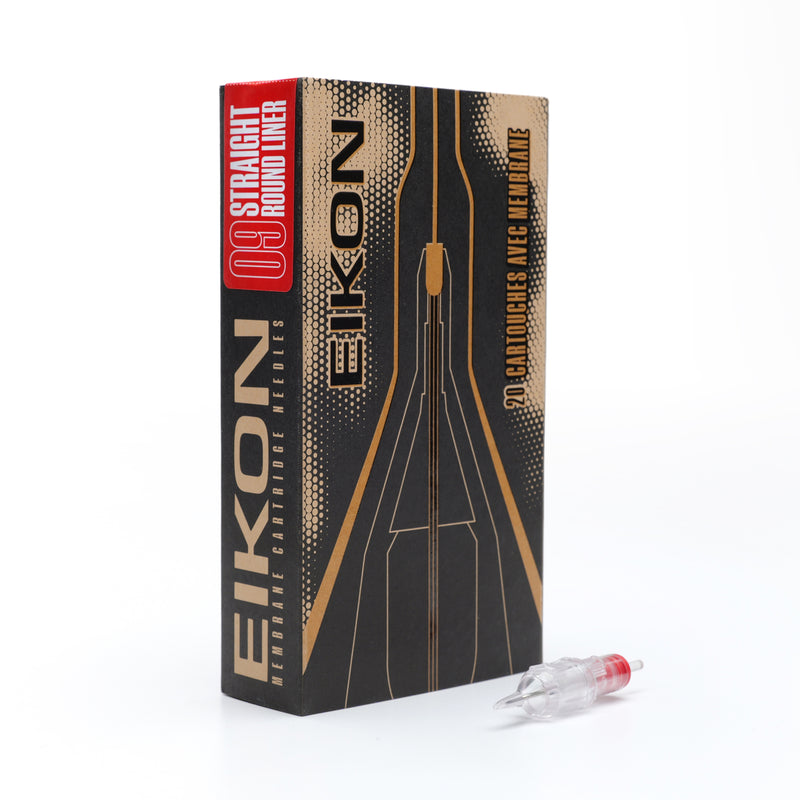
Straight Round Liners (SRL) use a lower solder point, which allows the needles to flare slightly at the tip. The result: more ink per pass and a bolder line at the same count as an RL. Artists who need multiple passes to saturate a line with a standard RL should try SRL at the same count first before stepping up in count, or consider switching to needles for shading if broader coverage is the goal.
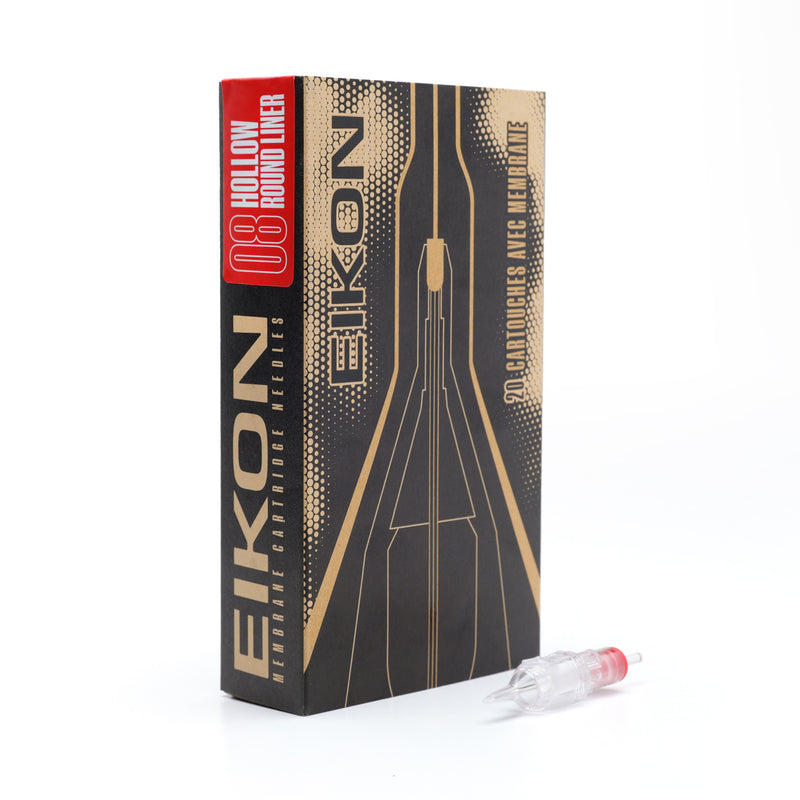
Hollow Round Liners (HRL) remove the centre needle entirely, opening a well that delivers maximum ink per pass with less total skin trauma than a same-count RL or SRL. Counts run even (06, 08, 10, 12) because the centre needle is required for geometric stability in odd-count configurations.
The RL→SRL→HRL progression is unique to Eikon's house brand in the shop. Kwadron and Cheyenne do not carry SRL or HRL. Common counts (1RL, 3RL, 5RL, 7RL, 9RL) cover fine detail through bold outlines. SRL and HRL are available at selected counts in 0.35mm (Red) through Eikon's house lineup.
Needle Diameter Guide: Bugpin, Standard, and Everything Between
0.25mm (bugpin) is Eikon's top-selling liner diameter, not a specialty tool but the most-reached-for diameter in the shop across fine-line, realism, portrait, and script work. The thinner needle creates a smaller puncture per pass: finer lines, less trauma, more control per needle placement.
0.30mm is the versatile mid-weight. A balance between the precision of bugpin and the ink weight of standard. General linework that needs to be both crisp and visible without fully committing to either extreme.
0.35mm (standard) for bold, visible lines and traditional styles. The wider needle delivers more ink per pass, which means faster saturation on heavy outlines that need to read at distance.
Diameter and count interact. A 5RL in 0.25mm produces a finer line than a 3RL in 0.35mm. Adjusting diameter while keeping count constant gives a new line weight without changing configuration type.
Long Taper vs. Medium Taper for Liner Cartridges
Long Taper is standard for liner cartridges, and the taper used across Eikon's entire liner range (RL, SRL, HRL). The gradual, sharp point reduces skin resistance per strike and gives artists consistent, controlled feel through different skin textures. For most liner work, Long Taper is the right call.
The Long Taper feel: the needle enters smoothly without the skin pushing back. Artists describe this as effortless compared to blunter tapers, less artist fatigue on long sessions, cleaner puncture through varied skin types.
Medium Taper is a more specialised option. A blunter point that deposits more ink per pass, useful for artists who want faster saturation on bold lines without stepping up in needle count. Lotus offers Medium Taper Liners as a distinctive option, the only brand in Eikon's liner range to do so.
Long Taper is recommended for most liner applications. Medium Taper is the deliberate exception when saturation speed on bold outlines outweighs the smoother-entry advantage of Long Taper.
What Are Power Liner Cartridges?
Power liners are liner configurations designed to deposit more ink per pass than a standard Round Liner at the same needle count. They achieve this through a lower solder point that allows more needle flare at the tip, the same mechanical principle as Eikon's Straight Round Liner (SRL).
Ideal use cases: bold outlines, script lettering, and traditional styles where line weight and saturation speed matter more than the finest possible precision. Power liners trade some crispness for ink efficiency.
Cheyenne's Safety Cartridge range includes a power liner configuration — artists who want Cheyenne's patented membrane in a power liner format will find it as part of the Cheyenne lineup Eikon carries. Eikon's SRL and HRL configurations offer the same ink-forward delivery in the house brand range.
Machine and Cartridge Compatibility for Liner Work
Cartridge liner needles are compatible with all pen-style rotary machines. All five brands Eikon carries (Eikon, Kwadron, Cheyenne, TEX, Lotus) are designed for the standard pen-machine grip format. If a cartridge feels loose or pops off, check grip and machine tolerances first, grip fit is the most common cause.
Configuration specs affect how a machine drives a liner. Larger needle counts and wider diameters create more surface tension against the skin. A machine with more power headroom handles this more comfortably. When a machine feels like it's working hard on a larger liner count, dialling down the count or diameter is often the right adjustment before changing any machine setting.
Eikon carries machines from FK Irons, Cheyenne, Bishop, S8, and INKLAB T7 AS, all pen-style rotary machines compatible with the standard cartridge format. Testing on practice skin with any new configuration before working on clients is how artists calibrate feel for a specific machine and liner combination.
Eikon's Buy More Save More program, 10% off on 5+ boxes, applies across Eikon Cartridges, Hydra Needles, and Griffin Tubes.
What to Look for in Quality Liner Cartridges
The bladder membrane provides consistent needle recoil from the first cartridge to the last—what artists notice as the machine maintaining its rhythm without the needle feeling looser or more erratic as the session goes on. The sealed design also prevents ink and blood from reaching the machine motor.
Stabilisation bars inside the housing keep the needle grouping travelling straight and true through the stroke. Reduced wobble and chatter means the line goes where the artist points, without drift between passes. Eikon's internal Stabilisation System is built into every liner in their house brand range.
Tip housing quality affects both ink delivery consistency and session flow. Clear tips let artists monitor needle extension and confirm cleaning between colours without stopping. The gap between needle and tip controls how smoothly ink reaches the needle; too loose creates inconsistent flow, too tight restricts it.
Needle sharpness retention across the session is a real differentiator between brands. Premium liner cartridges feel crisp from first to last pass, what artists notice as the needle still depositing cleanly without extra pressure an hour in.
Liner Cartridge Session Use and Replacement
Liner tattoo cartridges are single-use products, never reused between clients. Each cartridge is individually sterilised and designed for one tattoo session.
Within a session, replace a liner cartridge when you notice: the needle requiring extra pressure to deposit cleanly, lines feeling less crisp than earlier in the session, or ink flow becoming inconsistent. These are the signals that the needle has dulled past optimal performance, not a set time limit.
Switching between significantly different line weights in a session (fine-line detail to bold outlines) is also a practical reason to change cartridges. Starting fresh with the right configuration for each phase of work rather than asking one cartridge to cover the full range.
Stock enough cartridges for the session volume, accounting for configuration switches. Eikon's Buy More Save More program, 10% off on 5+ boxes, makes stocking a range of liner counts and diameters cost-effective.