USA
USA
 Canada

Tattoo Liner Needles - Tattoo Liner Needles
Filters
Products:



Professional Tattoo Liner Needles for Precise Line Work
Liner needles are configured in tight, round groupings designed for one job: putting clean, controlled lines into the skin. The tighter the grouping, the crisper the line, and tightness is determined by two variables working together: needle diameter and how high the soldering sits on the shaft. Every configuration from a single needle up to a 14RL is built for lining, but each produces a different line weight depending on count, diameter, and taper, whether you're working with traditional coil setups or modern rotary pen needles.
Quality liner needles differ in ways you feel during the session. Consistent sharpness across every needle in the box means no rough passes from dull points. Precise soldering keeps the grouping uniform so the line weight stays predictable. Consistent needle diameter means no surprises between batches.
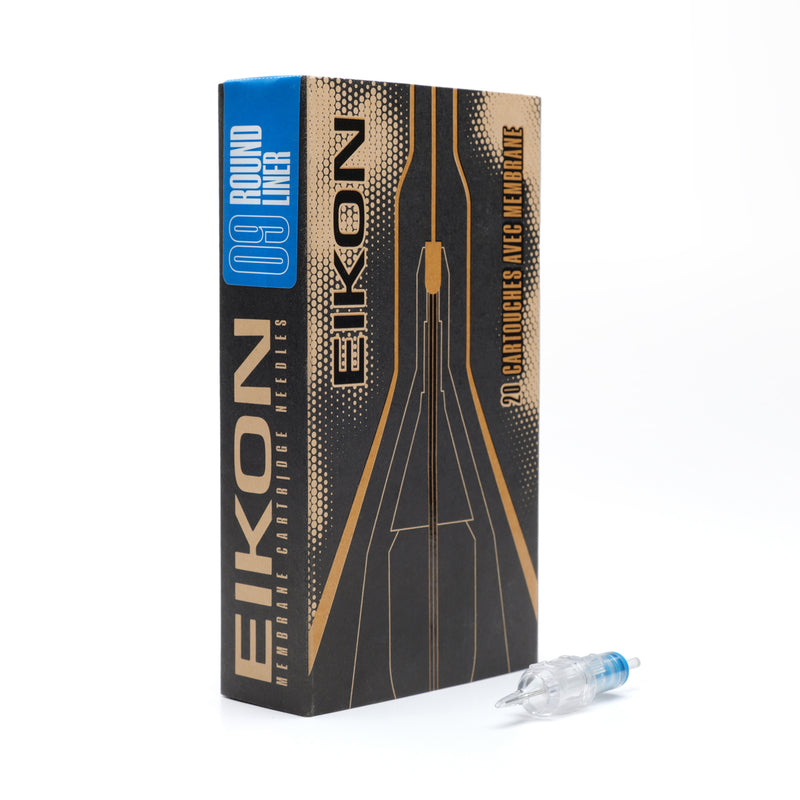
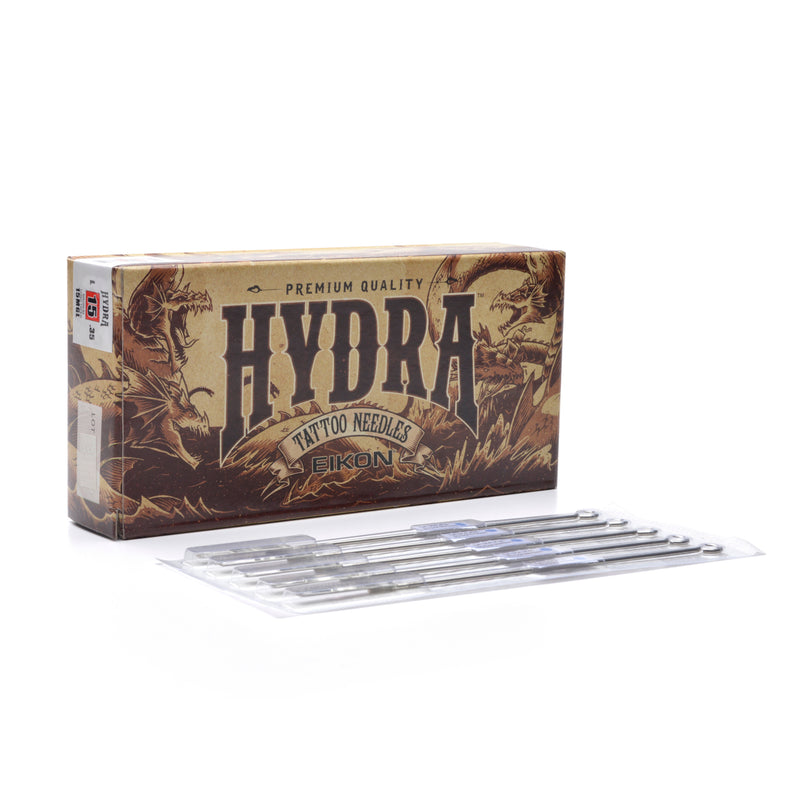
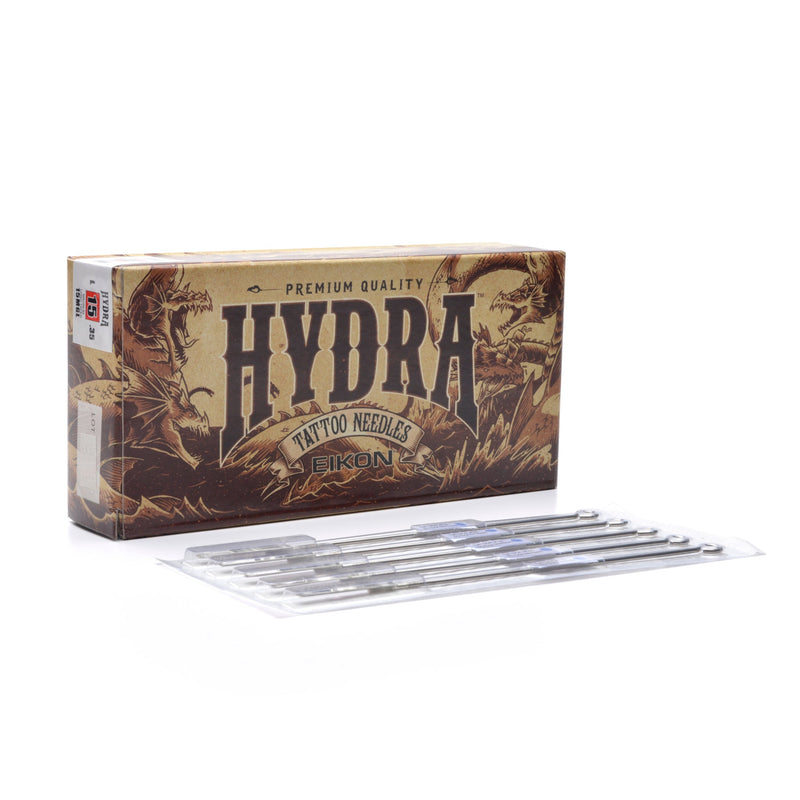
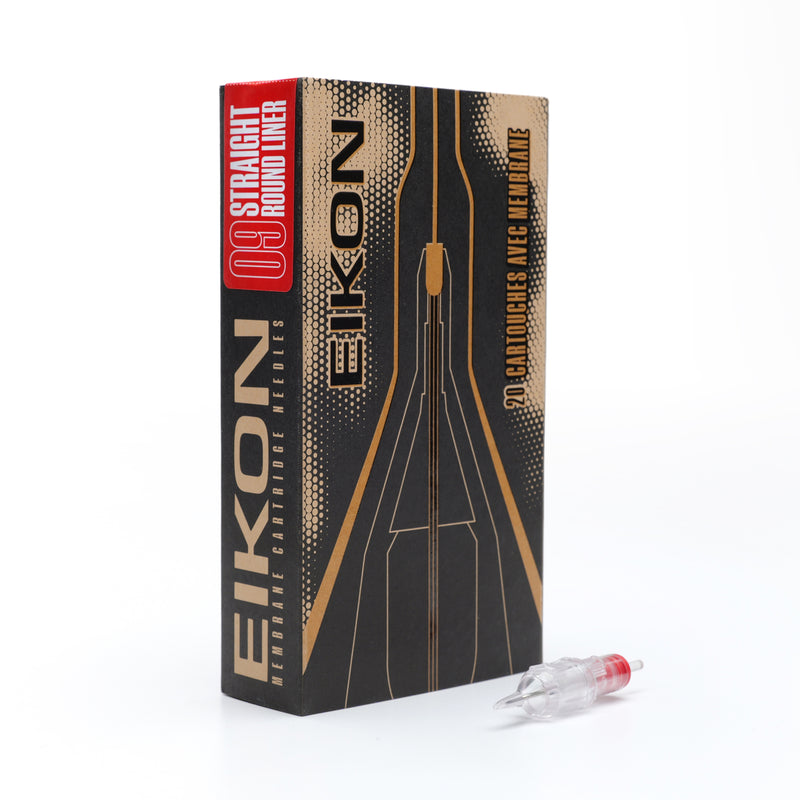
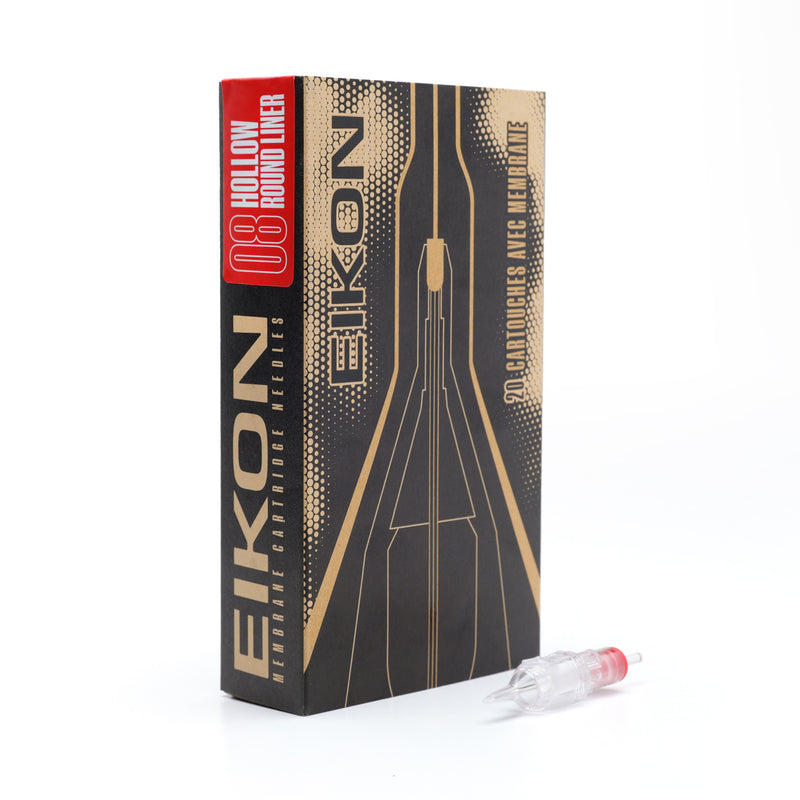
Eikon has manufactured needles for over 30 years, starting with loose needles, then bar needles (Black Box and Hydra Needles), and in 2024, we launched our own cartridge line. In cartridge liners, Eikon includes a stabilisation system in every liner configuration (RL, SRL, HRL) that keeps the needle running straight on every stroke, reducing chatter and keeping needles sharper longer. We hear from artists who said they could never line with cartridges, or would only line with coils, who now use Eikon cartridge liners for their linework.
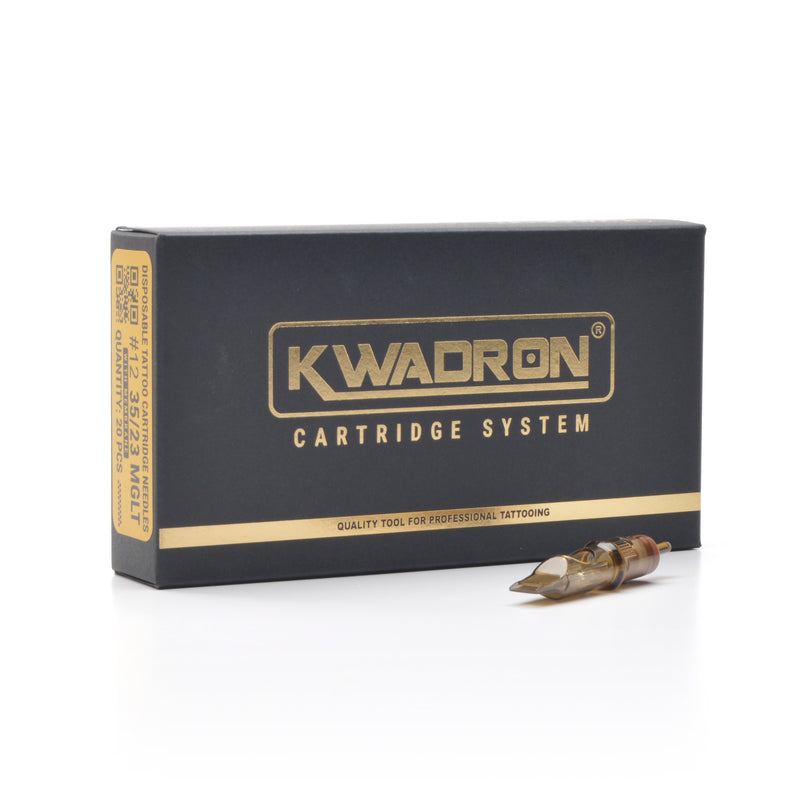
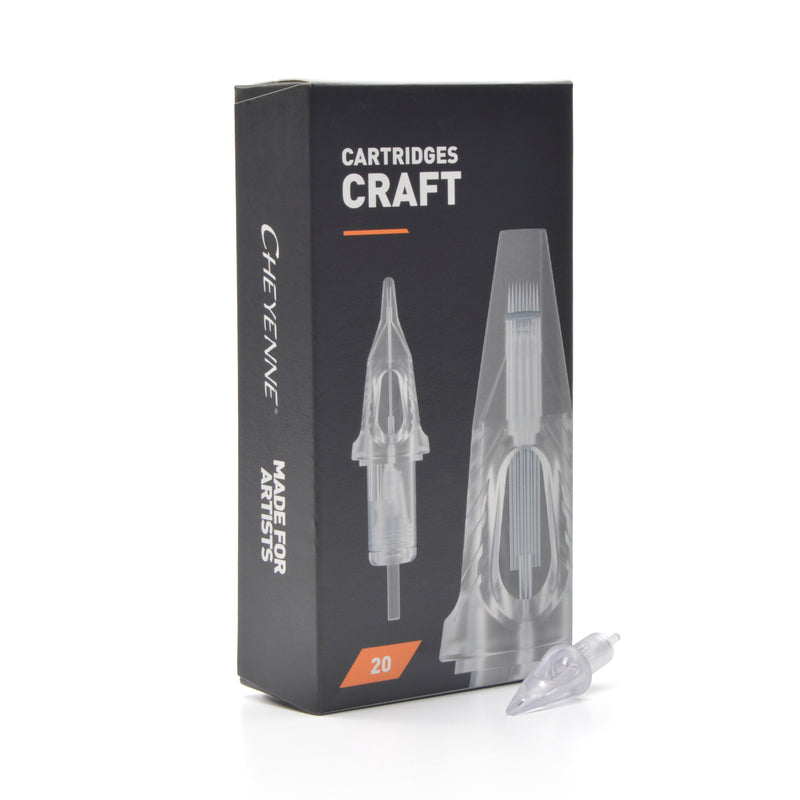
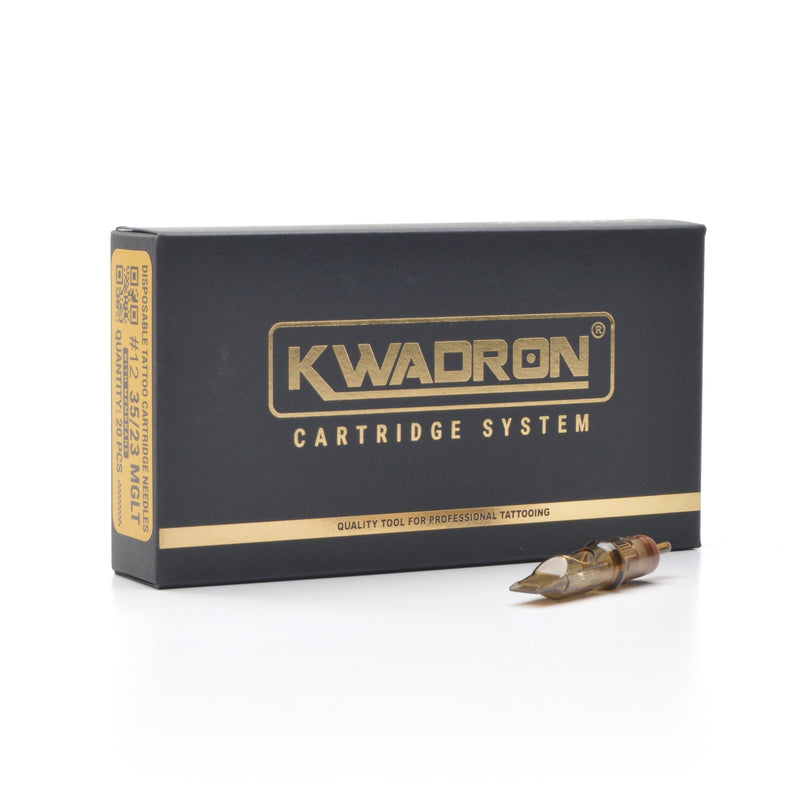
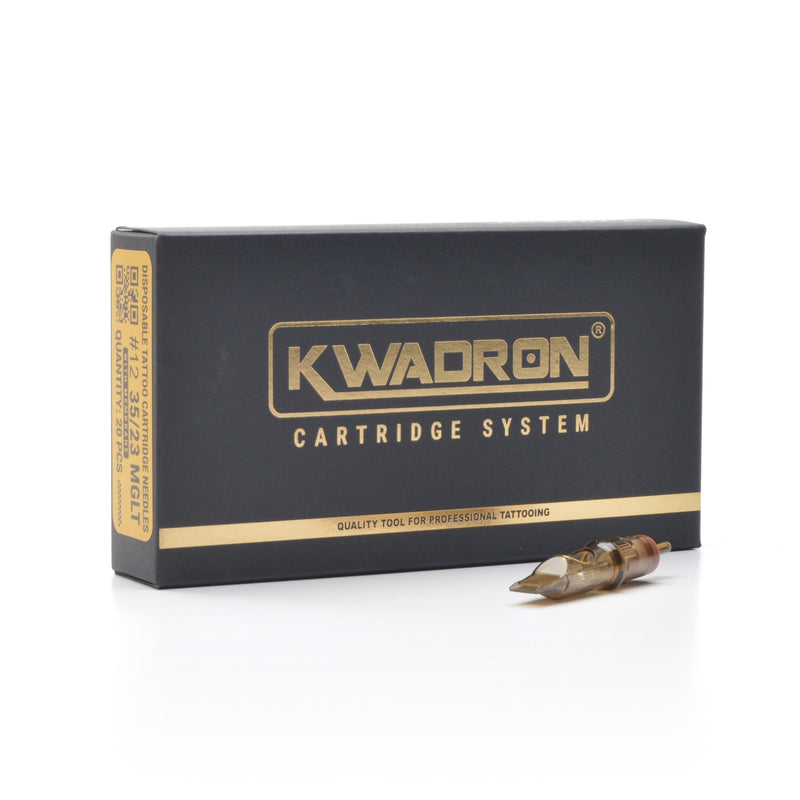
Eikon Tattoo Supply carries liner needles across our full cartridge range, Eikon Cartridges, Kwadron, Cheyenne, TEX, and Lotus, plus Eikon's own pre-made bar needles (Hydra Needles). Whether you are stocking a shop or building your professional setup, we carry the tattoo needle tip sets and liner options professionals work with.
Types of Liner Needles: Round Liners and Configurations
Round Liners (RL) are the tightest round grouping needles pulled high in the jig for maximum precision. This is the default liner for crisp, controlled linework. Eikon offers RLs from 1RL to 14RL across all three diameters: 0.25mm (Purple), 0.30mm (Blue), and 0.35mm (Red). Line weight is not just about needle count — a 5RL in 0.25mm produces a finer line than a 3RL in 0.35mm because count and diameter interact.
Straight Round Liners (SRL) use a lower soldering point than standard RLs, creating more flare at the tip for a bolder line with faster, more efficient ink delivery. SRLs are the step up from RL when you want a bolder line without jumping to a shader, same round grouping, looser arrangement. Eikon offers SRL in 0.35mm (Red).
Hollow Round Liners (HRL) remove the centre needle from the grouping, maintaining the full width of the larger configuration while reducing the force needed to push it into the skin. The void in the centre carries more ink and saturates the line more efficiently, producing bold lines with less skin trauma and fewer passes. HRL counts are even (06, 08, 10, 12) because the centre pin is removed from odd-count RLs. Eikon offers HRL in 0.35mm (Red).
The liner progression gives artists three distinct options: tightest and crispest (RL), bolder with faster ink delivery (SRL), and bold with more ink and less trauma (HRL). All three include Eikon's stabilisation system in the cartridge versions.
Choosing the Best Liner Needles for Your Tattoo Style
1RL to 3RL configurations produce the finest lines, the go-to for fine-line work, script lettering, and intricate detail. In 0.25mm (bugpin), these configurations produce the tightest possible grouping and the finest puncture. Bugpins are one of Eikon's top-selling diameters, used by artists who prefer the finer puncture and tighter grouping for everyday lining as well as detail and micro-realism work.
5RL to 7RL configurations handle general lining work across most tattoo styles, outlines, traditional work, and anything that needs a medium line weight. 7RL sits at a natural geometric efficiency where the 1-centre-plus-6-outer arrangement fills the area with zero centre gap, making it a strong all-purpose liner.
9RL to 14RL configurations deliver bold lines and heavier line weight for traditional work, tribal, and any style where line presence is the point.
Needle count is only half the decision; diameter determines the actual line weight within any count. An artist can shift the diameter up or down to get the line weight they want without changing needle count or technique. Eikon's colour-coded cartridge housings make this practical in the shop: Purple (0.25mm), Blue (0.30mm), Red (0.35mm), visible from the box to the cartridge base, so you can tell the diameters apart even when cartridges are loose on your station.
Understanding Needle Diameter for Liner Needles
Needle diameter is the thickness of the individual wire in each needle; it determines how fine or bold your lines are, how much ink each needle carries per pass, and how much trauma each puncture creates. Eikon offers three diameters: 0.25mm (bugpin), 0.30mm, and 0.35mm (standard). Diameter is not a quality ranking; each serves a different purpose depending on the detail level and ink deposit your work requires.
Bugpin (0.25mm) produces the finest puncture and the tightest possible groupings because thinner wire packs closer together at the same soldering point. This is Eikon's top-selling liner diameter; artists use it for fine-line work and micro-realism, but also as their everyday liner because they prefer the finer puncture and tighter grouping. When a customer asks for bugpin, we reach for the 0.25mm Purple boxes.
The 0.30mm sits between bugpin and standard, fine enough for detailed work but with slightly more ink delivery than bugpin for artists who want that balance. It gives artists a middle option when bugpin is too fine but standard is too bold.
Standard diameter (0.35mm) creates a bolder puncture with more ink delivered per pass, the go-to for traditional-style linework and any application where maximum ink deposit matters.
Diameter and needle count together determine actual line weight on skin; a 5RL in 0.25mm produces a finer line than a 3RL in 0.35mm. Artists who understand this can shift the diameter up or down to get the line weight they want without changing needle count or technique. Eikon's colour-coded cartridge housings make this visible at a glance from box to station.
Needle Taper: Long Taper vs Medium Taper for Different Line Work
Taper is the length of the sharpened point of the individual needle, from the very tip to where the needle reaches its full diameter. It determines how the needle enters the skin: a longer, finer point creates less resistance per strike and smaller puncture holes, while a shorter, blunter point pushes more ink into the skin with each pass.
Long taper is the default for liner work, 90% of Eikon's needle line uses long taper. The finer point creates less resistance per strike, less trauma to the skin, and smaller puncture holes. For linework, long taper paired with a tight configuration is what produces smooth, controlled lines that heal clean.
Medium taper has a blunter tip that holds more ink right at the point of contact, depositing more pigment per pass. It is not about depth control or durability; it is about saturation efficiency. In Eikon's cartridge lineup, medium taper appears in select curved magnums (Red Label) designed specifically for colour packing. Other brands Eikon carries, including Kwadron and Cheyenne, offer medium taper across more configurations, giving artists more medium taper options when shopping at Eikon. For liner work, long taper is the standard choice.
Taper and soldering are different variables, a common confusion point. Taper is the point geometry of the individual needle. Soldering determines how tightly the needles are grouped. Both affect the line, but they are independent: a crisp line requires a long taper combined with a tight solder, and changing one does not change the other.
Cartridge Liner Needles: Benefits for Professional Artists
Cartridge liner needles combine the needle grouping, housing, tip, and membrane into a single disposable unit; one purchase replaces separate needles, tubes, grips, and tips. No tube matching required (the tip comes factory-matched to the configuration, so the needle runs straight out of the box), and no autoclave sterilisation of reusable tubes between clients.
The sealed bladder membrane inside each cartridge serves as the needle's return spring; it pulls the needle bar back after each stroke, and a quality membrane delivers consistent recoil so the hit feels the same at hour six as it did at hour one. The sealed design also keeps ink and blood out of the machine motor; machine manufacturers void warranties for ink contamination, making the sealed membrane a practical protection for pen-style setups. Check with your local health department for sealed system requirements; fully sealed cartridges meet that standard.
Liner stability was the biggest barrier to cartridge adoption; early cartridges with elastic membranes and loose tips could not match the consistency of a coil machine driving bar needles. Eikon's cartridge liners include a stabilisation system in every liner configuration (RL, SRL, HRL) that keeps the needle running straight on every stroke. We hear from artists who switched from coils to Eikon cartridges for their linework.
All cartridges Eikon carries, Eikon Cartridges, Kwadron, Cheyenne, TEX, and Lotus are compatible with all pen-style machines, including Bishop and Cheyenne rotary machines, and other cartridge grips we carry in store. Switching between liner configurations during a session takes seconds: pull one cartridge, click in the next.
Liner Needle Depth and Machine Setup: What the Product Affects
Needle depth, machine speed, and hand movement are technique variables that every artist develops with practice; they are not product specifications. What the product DOES affect is how the needle enters the skin: taper determines resistance per strike (long taper = less resistance), diameter determines puncture size and ink deposit, and configuration tightness determines how much ink is delivered per pass.
Machine settings vary by machine, needle configuration, and artist preference. Consult your machine manufacturer's recommendations for starting points and adjust based on how the needle feels in the skin.
Cartridge liners — including Cheyenne Craft Cartridges and Eikon's own line — add two variables that affect the feel during tattooing: the membrane's return firmness (how snappy the needle comes back between strokes) and, in Eikon cartridges, the stabilisation system (how straight the needle stays in the housing). Needle count also plays a role — a higher count demands a more consistent membrane to maintain hit quality across the grouping. A quality membrane should feel the same at the end of a session as it did at the start. If your hit quality changes mid-session, the membrane may be softening under high voltage.
For artists developing their craft, the product choice matters and so does the price: start with a mid-range configuration (5RL or 7RL) in a gauge and diameter that matches your intended line weight, and use long taper for the most forgiving entry into fake skin. Stock up on the right supplies from the start, build your technique around the product, then experiment with different configurations and diameters as you develop your feel. For the full range across needle types and configurations beyond liners, browse the complete tattoo needles collection.