USA
USA
 Canada

Portrait Artist Favourites - Portrait Artist Favourites
Filters
Products:



What Portrait Work Asks of an Ink
Skin tone tattoo ink is a tonal problem before it is a colour one. The palette runs narrow and low in chroma next to the rest of colour work, and what matters is whether a range moves predictably between tones — not how bright any single bottle looks.
That puts structure ahead of almost everything else. A tone you can find again three months later is worth more than a tone that happened to be right once.
The other half is that you never see the ink on its own. It sits under a translucent layer carrying its own colour, so the same tone reads differently on two clients — the value that matched last week may not match today.
The Skin-Tone Ranges Eikon Carries
Three of the seven lines Eikon carries run a dedicated skin-tone range, and each is organised differently. That structure — not the name on the bottle — is usually what decides which one fits how you work.
Eternal — the named tone palette
Eternal runs the widest skin-tone offer here, organised by name rather than by number. The Portrait Skin Tones line is twelve tones — Almond, Sable, Rich Espresso, Light Peach, Nude Blush, Rust, Spice, Sea Shell, Rose Satin, Papaya, Enchanted Lilac and Wine Berry — each sold individually.
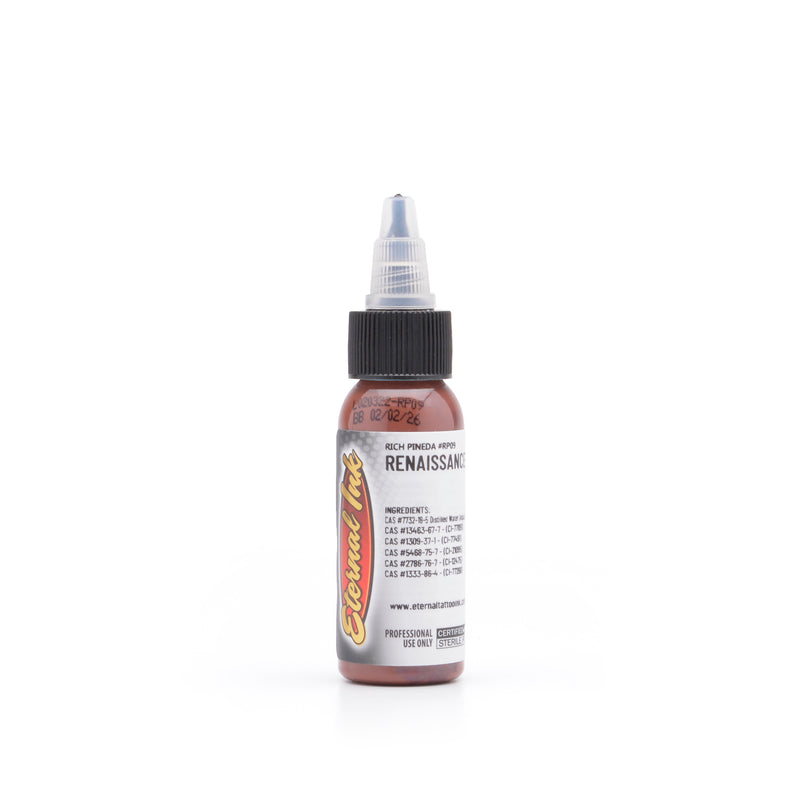
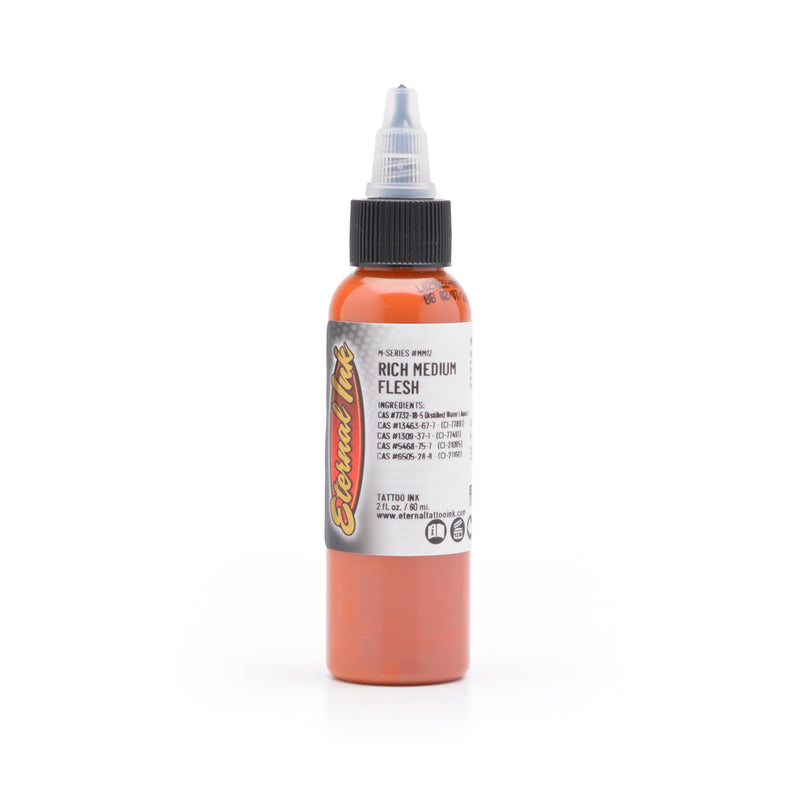
Beside it sit the signature flesh ranges: Andrea Afferni's beiges, fawns and mauves, Rich Pineda's flesh range running from porcelain through peachy-pink to deep reds and browns, and two flesh cuts in the M Series. A named palette gives a wider spread than a ladder does; what it does not give is a guaranteed even interval between neighbours — the trade covered on the named portrait tones page.
Because the tones are named rather than numbered, the range also splits along warm and cool undertones — beiges and fawns on one side, mauves and berries on the other.
Fusion — the five-step flesh ladder
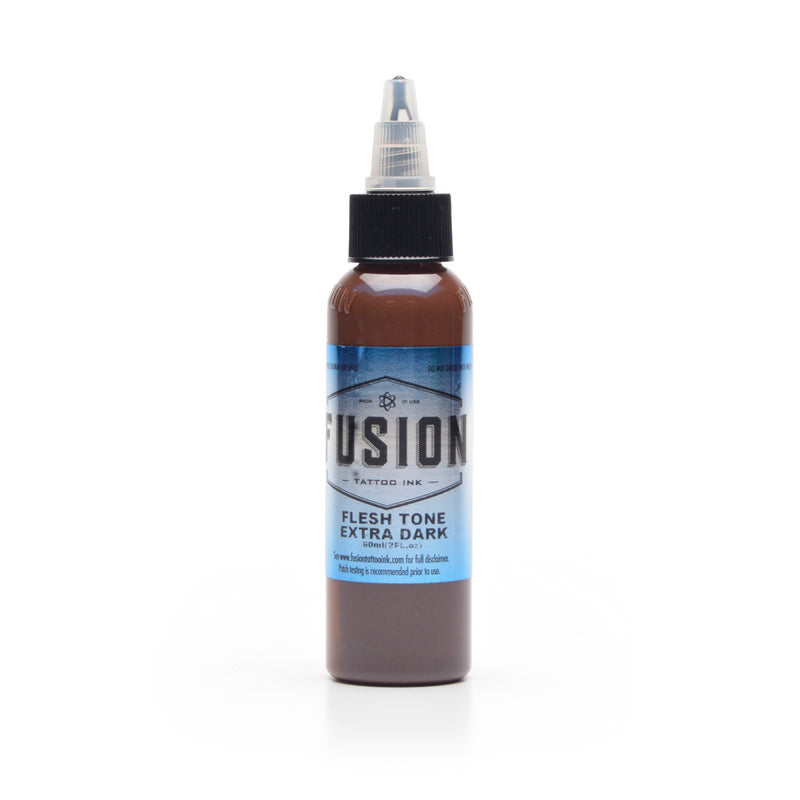
Fusion takes the opposite approach: one range cut into five steps — Extra Light, Light, Medium, Dark and Extra Dark. You reach for a position rather than judging by eye, and the step either side of it is a known quantity.
Fusion also carries named flesh tones alongside the ladder — Liquid Flesh, Light Flesh, Dark Flesh, Foundation Flesh and Deano Cook's Deep Flesh. Those are separate tones, not rungs on it.
Solid — the three-step skin range
Solid's Victor Chil range cuts the same idea into three: Light Skin, Medium Skin and Dark Skin, with a standalone Flesh sitting outside the sequence.
Three steps against five is a difference of resolution, not of quality. Five cuts land you closer to a given value without mixing toward it; three ask you to close more of that distance yourself. Both ladders are set side by side on the graduated light-to-dark steps page.
Where the Three Ranges Leave Gaps
None of them covers every client, and they run out in different places.
Both ladders concentrate their resolution through the middle, so the very lightest and very darkest skin is where a stepped range thins first. The named palettes reach further out but with no guaranteed interval — more specific tones, less certainty about what sits between them.
Client skin clusters through the middle, which is why the mid values are the ones that empty. The outer ones are what you go looking for, and the pre-selected tone set does not solve them either.
How Does Skin Change the Tone You See?
You never see a skin tone on its own. It sits in the dermis under a translucent layer that is itself tinted, and that layer is part of what reaches the eye — the reason a tone dialled in on one client reads differently on the next.
That layer does not stay constant either. As pigment thins over the years, the tone underneath contributes more of what you see rather than being masked by it.
The honest limit is that no catalogue answers this. Which tone suits which client is judged on the skin in front of you.
Buying Skin Tone Tattoo Ink in Canada
Everything on this page ships from Kingston, Ontario, and sells to working artists only — ordering needs a verified Pro Account, which is about trade access rather than price.
Each tone goes out individually sealed, so a leak in transit costs one tone instead of the order. Heat packs are free from November through March, when a shipment can sit in an unheated truck.
Sizes vary by line, and each product page lists what that tone comes in. All three brands are notified with Health Canada, which is what makes them legal to sell here.