USA
USA
 Canada

Fusion - Fusion
Filters
Products:
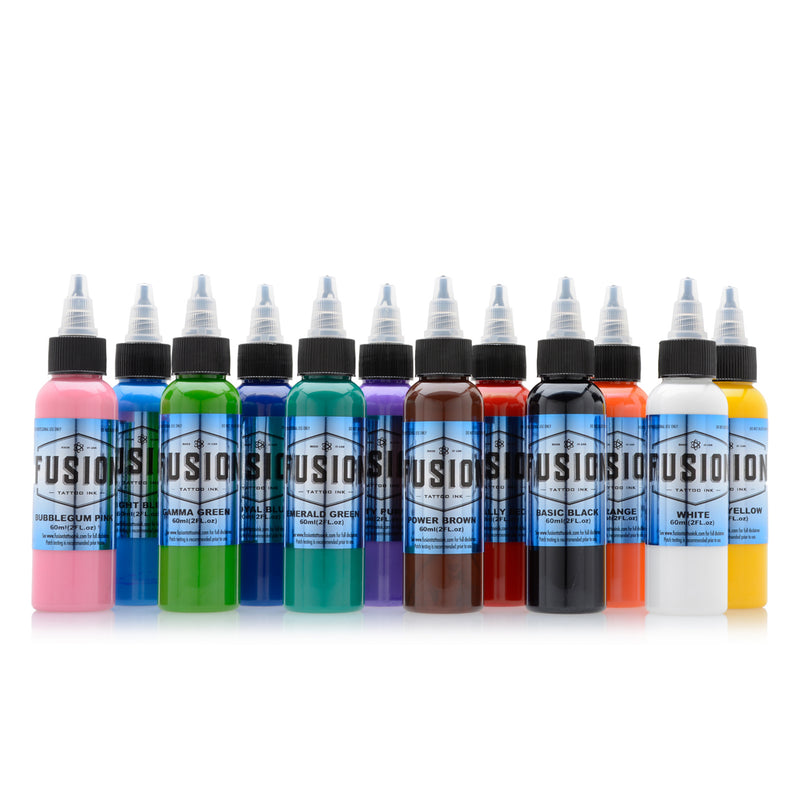
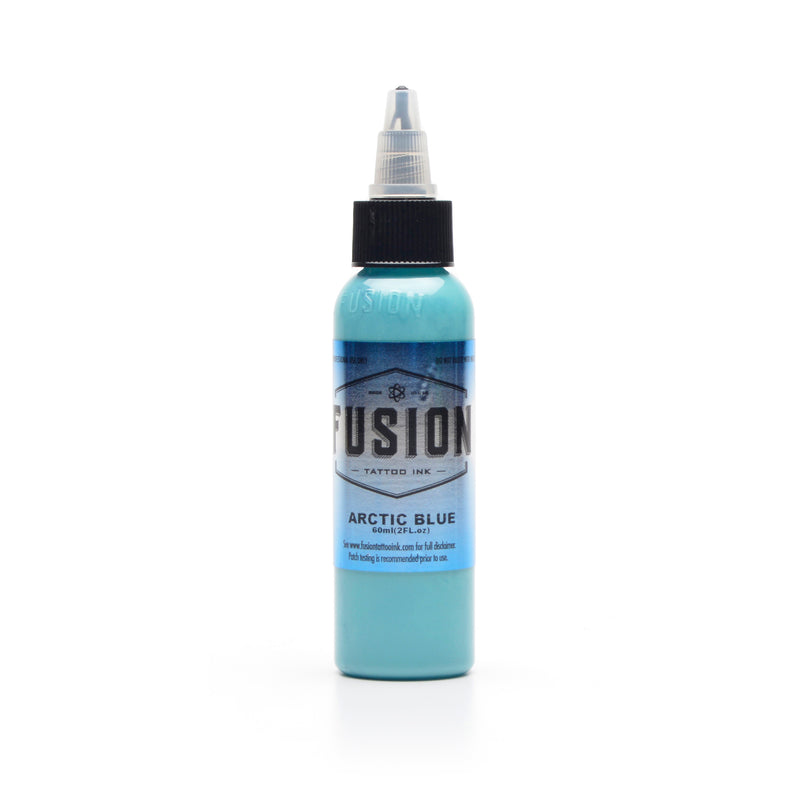
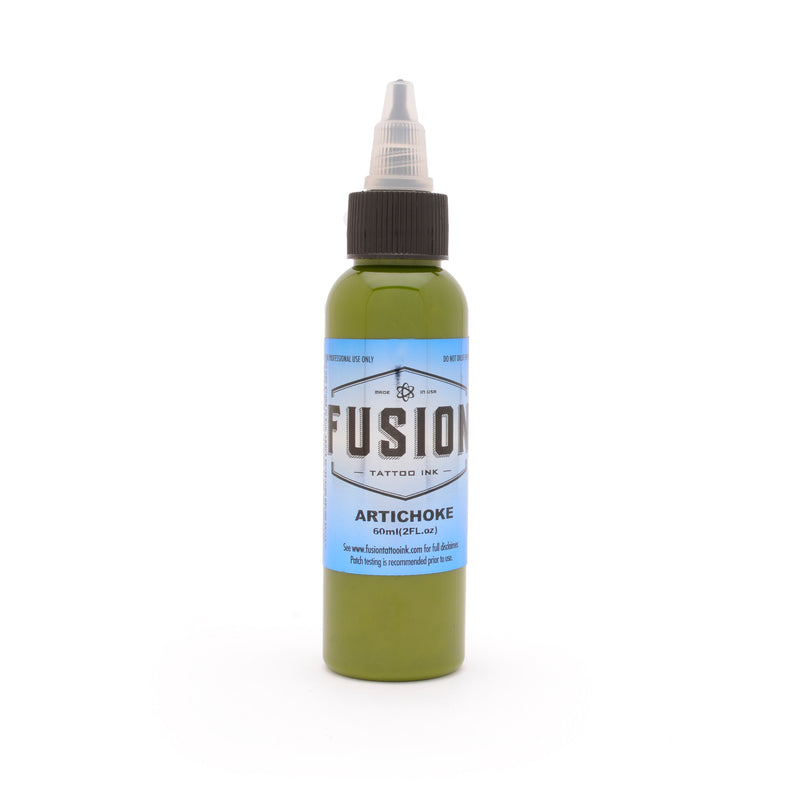
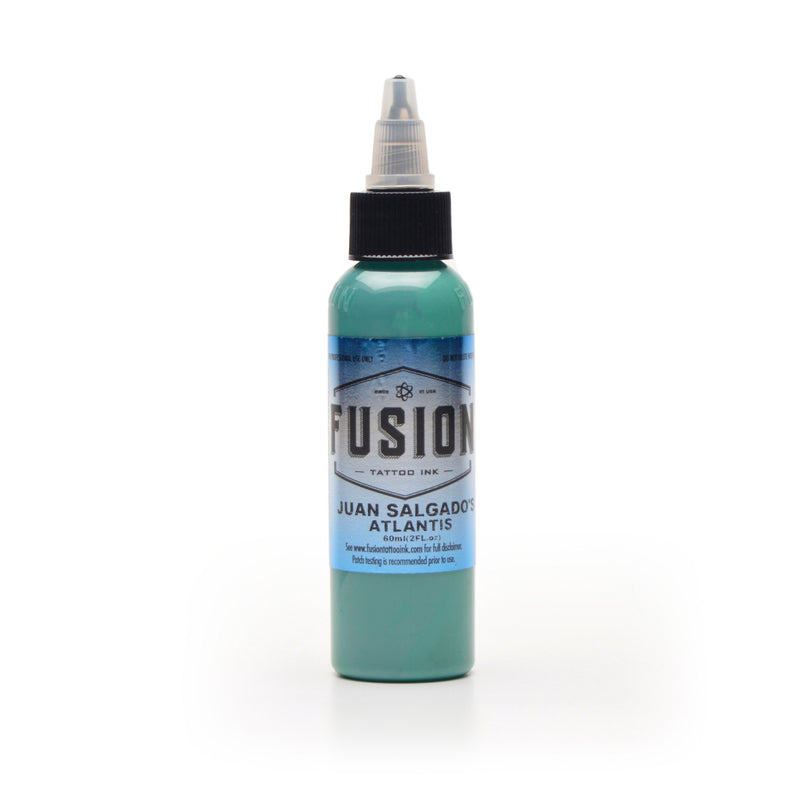
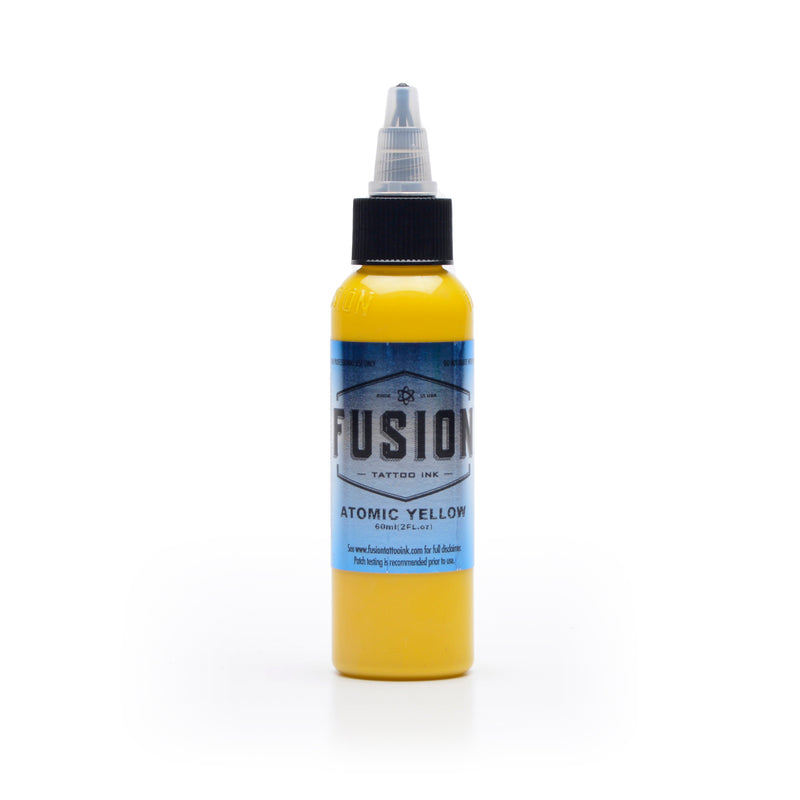
Fusion Tattoo Ink: shading built into the line
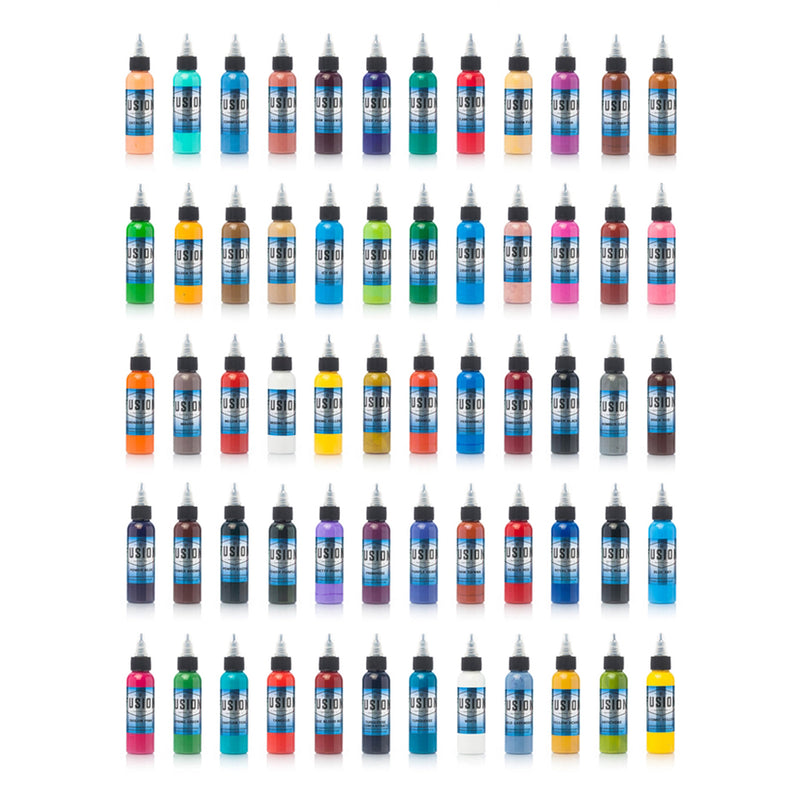
Fusion tattoo ink is a broad professional colour line with a shading system built into it. Fusion's own billing for the range is the highest pigment load going, and artists on the trade forums describe the colours as bright and the ink as easy to put in — the brand's claim and their reports, in that order, rather than a measurement anyone has published.
Fusion is the one brand Eikon carries that numbers its cuts. Other makers pre-mix washes in stages; Fusion prints the cut number on the label.
The Gradient System, cut by cut
Each colour family in the Gradient System steps down in numbered cuts — Uncut at full base pigment, then #3, #2 and #1, which is a quarter base to three quarters white. White Uncut and White Cut sit alongside them for highlights and for thinning a mix. The system spans eleven base families; the full four-cut run is on Black, Blue, Green and Purple, and the other families carry part of the ladder.
The Gradient System comes in 1 oz. Elsewhere in the line the size depends on the colour: 1 oz, 2 oz, and 4 oz on the blacks, whites and greywash you pour most of.
The five-step ladders beyond colour
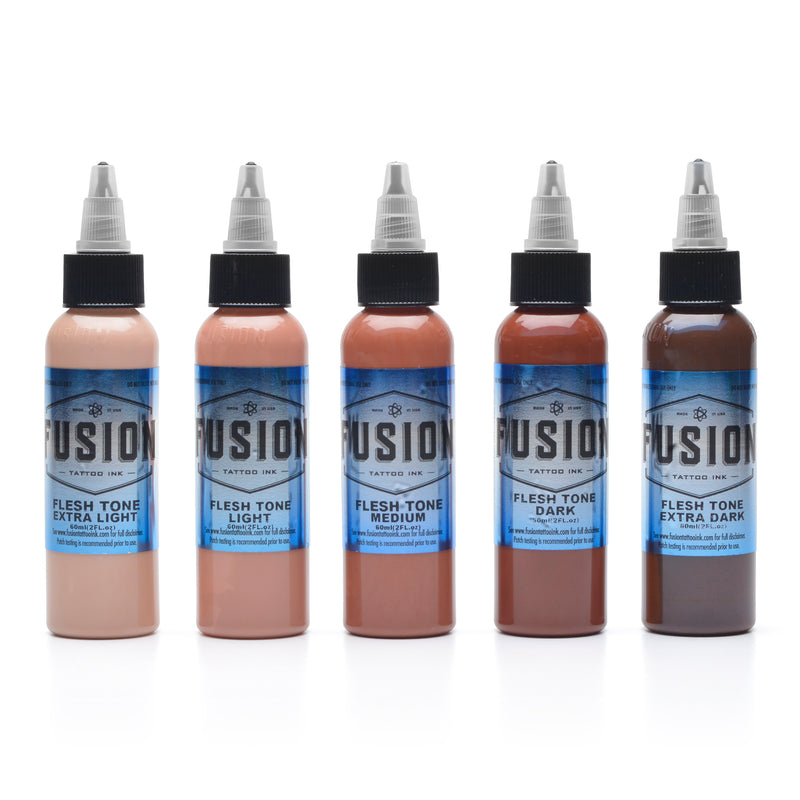
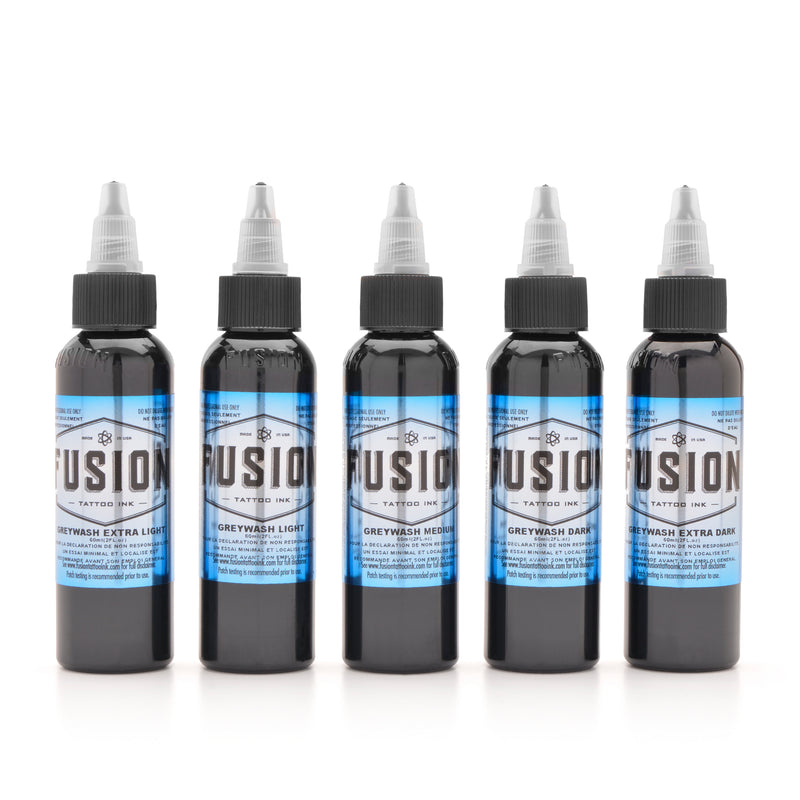
The Greywash set runs five pre-mixed stages, Extra Light through Extra Dark, and the Opaque Grey and Opaque Blue series step the same five. The Flesh Tone set does too — separate colours from the Light, Dark and Foundation Flesh inside the Standard line.
Two more five-colour series shift in saturation rather than stepping in value. Pastel runs Blue Mist, Lemon Drop, Lush Lilac, Pastel Pink and Soft Mint; Muted runs five muted colours — blue, green, purple, red and yellow.
Artists working colour realism will find the rest of the realism palette in colour realism artists' favourites.
The signature palettes
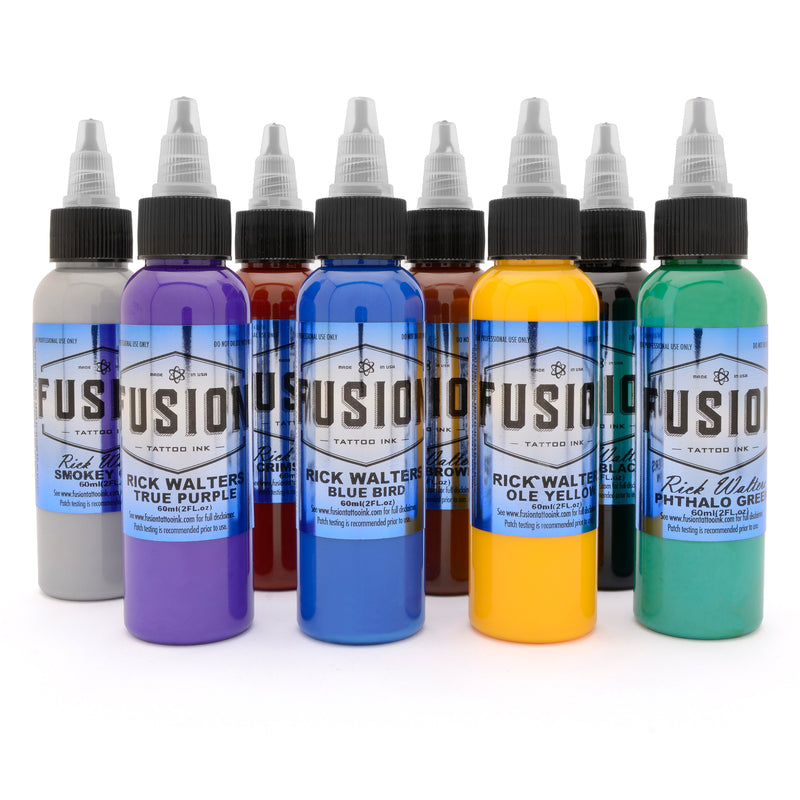
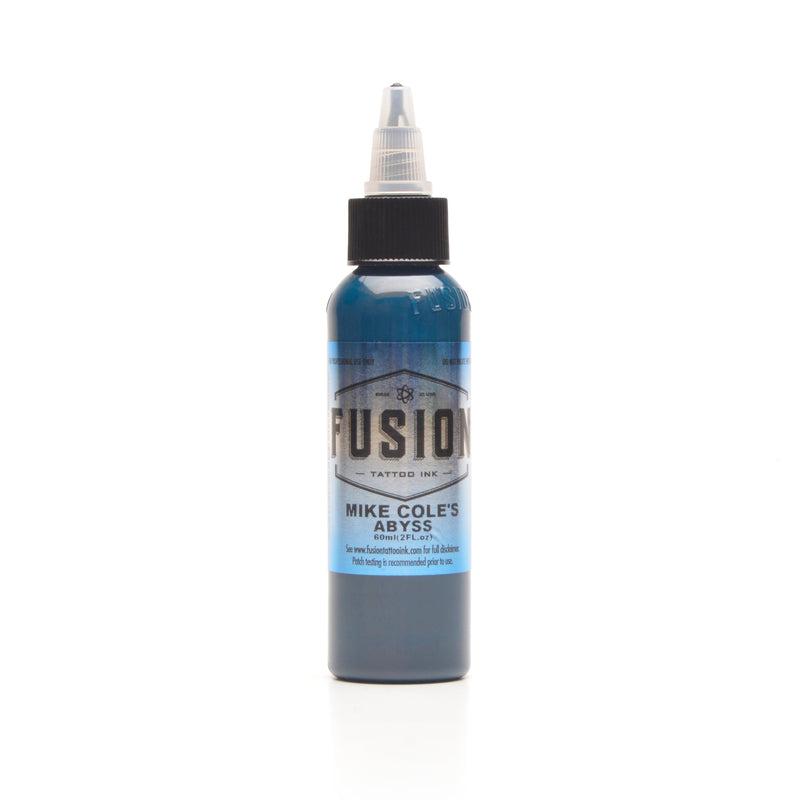
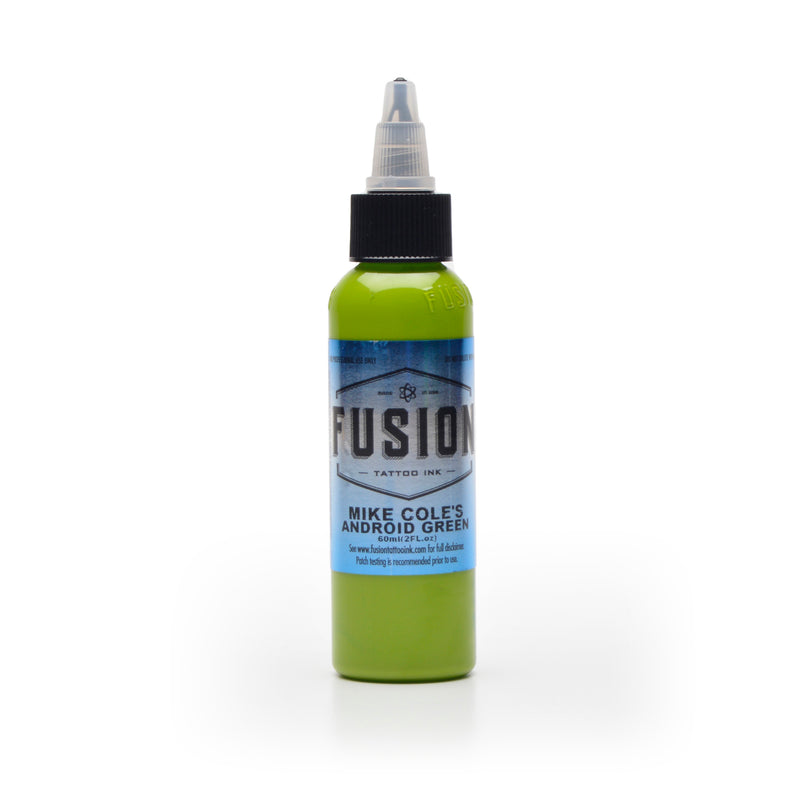
On the signature side there is the eight-colour Rick Walters palette — Basic Black, Blue Bird, Crimson Red, Eagle Brown, Ole Yellow, Phthalo Green, Smokey Gray and True Purple, an American Traditional working set from a tattooer who ran Grimm's World Famous Tattoo on the Pike for twenty-five years. Walters died in 2019 and the line is a tribute, handled as one. The palettes of Ben Kaye, the New Zealand realism specialist who has tattooed with Fusion exclusively for years, and of Mike Cole, Deano Cook, Shige and Jeff Gogue sell as singles rather than boxed sets.
Is Fusion tattoo ink good? What artists actually report
The recurring phrasing on the trade forums is medium thickness, easy to put in, flowing smoothly for fine line work and for filling larger areas. That is artist perception rather than a specification: Fusion's SDS lists viscosity as "no data," and no brand Eikon carries publishes a viscosity figure. What Fusion does disclose is the carrier — the Standard and signature lines use water, glycerin, witch hazel and isopropyl alcohol; the Gradient System uses water and medical-grade ethanol.
Ben Kaye calls Power Black smooth and solid. Power is the uncut, high-saturation tier inside the Standard line, built for packing rather than lining; Basic Black is the thinner all-purpose black Fusion points at for line work.
On the same forums, artists note that Fusion can dry in the caps over a long session. Mixing solution, glycerin or distilled water brings it back, and that same easy dilution is why some artists cut it for their own greywash.
What a pre-mixed cut fixes is the ratio: a #2 is half base and half white every time, so the distance between your values stays put even when you are not the one mixing it.
The reformulation, and who makes Fusion
Fusion rebuilt the Gradient System's formula for MOCRA's coming requirements in the US: glycerin and isopropyl alcohol came out, medical-grade ethanol went in, and by Fusion's own account the pigment load went up. That change applies to the Gradient System — the Standard line and the signature palettes carry the original carrier.
The company was founded in 2009 by Adam Everett, a pigment chemist working since 1995 who had brought a signature recipe to Eternal Ink in 2004. He sold his share in 2017. Fusion is owned and run by tattooist Jason Guy and his family, and manufacturing is in the United States.
The 2017 recall and what Fusion discloses
In November 2017 the FDA published a recall of five Fusion colours — Royal Blue in its glycerin formula, Light Blue, Pretty Purple, Gamma Green and Orange — for microbial contamination. It was a manufacturing-hygiene event rather than a formulation one.
Fusion publishes CI numbers in its SDS — titanium dioxide is CI 77891 and carbon black is CI 77266 — which puts it among the minority of the brands Eikon carries that disclose any at all. What it does not publish is a per-SKU ingredient block, so a specific colour's full pigment list is not something the product page can give you.
For your clients
Eikon carries Fusion because it comes from a Health-Canada-notified brand, and we confirm that status before we bring in any ink. Notifying Health Canada is what makes an ink lawful to sell here; there is no government test an ink passes first.
Health Canada sets the impurity and microbial benchmarks — lead at or under 10 ppm, arsenic and cadmium 3, mercury 1, antimony 5, alongside the ISO 17516 microbial limits — and enforces them after an ink is on the market. Meeting them is the manufacturer's responsibility.
For a client with a documented pigment sensitivity, the safety data sheet is the reference, and Fusion keeps its sheets on its own site.
Fusion's line is vegan. Vegan is not allergen-free: any pigment can provoke a reaction in a sensitive client, and a 24-hour patch test before a large piece is still right for anyone with known sensitivities. Fusion's SDS does not classify the product as a skin irritant or sensitiser.
Fusion does not publish PMU or pregnancy guidance on its public pages, and every colour carries a 12-month shelf life from opening.
Pale work and titanium white
For clients whose work runs pale, there is one caveat. Titanium dioxide — CI 77891, named in Fusion's SDS — is a general lightening pigment, and it can yellow and lighten under prolonged UV exposure. That is true of any titanium-heavy pastel from any maker rather than a verdict on Fusion, and a client planning a lot of soft pastel work should hear it before the session.
Ordering Fusion from Eikon
Every Fusion bottle goes out individually sealed in its own bag, so a leak in transit costs one bottle instead of the order, and from November through March ink ships with free heat packs so nothing freezes on the way. Safety data sheets live on Fusion's own site, where they stay current.
Fusion ships from our shop in Kingston, Ontario. Order by 1 pm EST Monday to Friday and it leaves the same day, ground is free over $150, and UPS reaches Ontario and southern Quebec the next business day.
Like all tattoo ink at Eikon, Fusion is sold to verified professionals through a Pro Account.
Fusion by set, by black, by white
If you buy Fusion by the set rather than as singles, the boxed palettes are grouped in Fusion sets. The blacks sit together in Fusion black and the whites in Fusion white.
If your work is mostly black and grey, Empire Inks builds its wash lines as four-stage systems. If you want a palette that holds steady year over year, Dermaglo has run one series since 2002. And for range, Eternal Ink runs three hundred–plus colours on a colour wheel.
Every ink Eikon carries sits brand by brand in tattoo ink.